Just-in-Time Access and Zero Standing Privilege for Enterprise 2026
Standing privilege is the legacy pattern — users (and service accounts, and AI agents) hold permanent entitlements regardless of whether they're using them right now. Zero Standing Privilege flips the model: nobody has permanent privileged access; access is granted at the moment of need and revoked automatically when the task completes. The 2026 enterprise reference on JIT access architecture, the workforce segments where it's operationally mature, and where the pattern breaks.
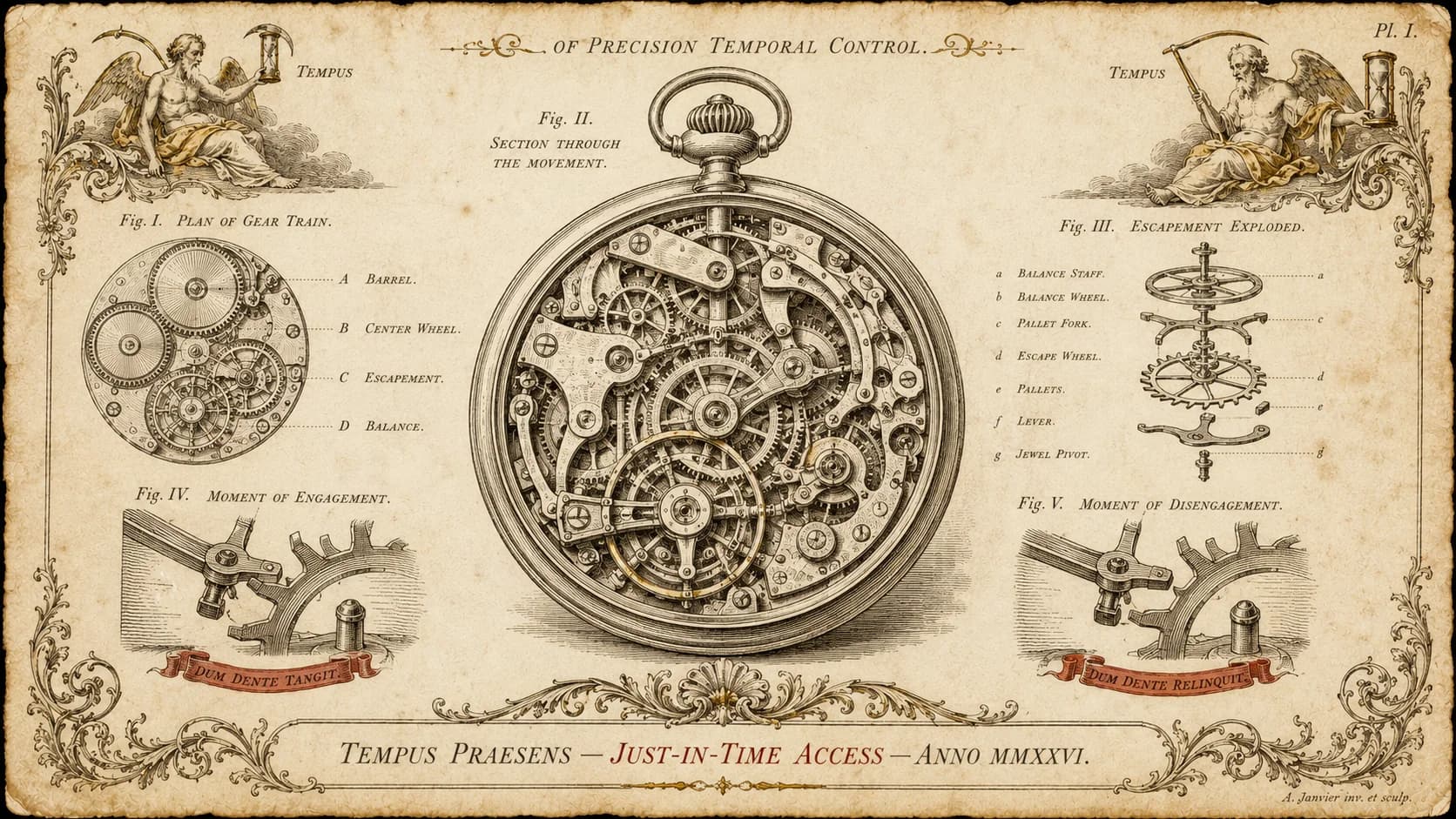
Standing privilege is the legacy pattern — users (and service accounts, and AI agents) hold permanent entitlements regardless of whether they're using them right now. Zero Standing Privilege flips the model: nobody has permanent privileged access; access is granted at the moment of need and revoked automatically when the task completes. The 2026 enterprise reference on JIT access architecture, the workforce segments where it's operationally mature, and where the pattern breaks.
- Standing privilege is the legacy access pattern — users, service accounts, and AI agents hold permanent entitlements regardless of whether they're currently using them. The dormant-privilege attack surface is exactly what attackers target.
- Just-in-Time (JIT) access grants entitlements at the moment of need, scoped to specific tasks, and revokes them automatically when the task completes. Zero Standing Privilege (ZSP) is the architectural state where JIT is the only access pattern — nobody has permanent privileged access at all.
- Four architectural patterns enable JIT in 2026: time-bounded access (entitlement carries an explicit expiration), workflow-attested elevation (the elevation request goes through structured approval), risk-evaluated approval (the approval automation considers signals beyond manager judgment), and auto-revocation (the entitlement removes itself when the time bound expires or when usage signals indicate the task is complete).
- JIT/ZSP is operationally mature in 2026 for five workforce segments: privileged operators (PAM-integrated JIT for domain admins, database admins, infrastructure operators), production-system access for engineering, financial-system operators (treasury, payment-initiation), incident-response teams (break-glass elevation during incidents), and AI agents (per-invocation scoped delegation tokens covered in the [Agentic Authentication piece on ICC](https://identitychallengecard.avatier.com/en/blog/identity-ai-agents-agentic-authentication-2026/)).
- JIT breaks operationally in three failure modes: over-friction (the approval workflow is so slow that users develop workarounds), approval bottleneck (the approver becomes the constraint), and broken-glass-scenario gaps (the fallback path for cases when the JIT system is unavailable becomes the new standing-privilege backdoor). The 2026 reference architecture addresses all three explicitly.
The legacy enterprise access pattern is standing privilege. A user (or a service account, or an AI agent) holds a set of entitlements continuously, regardless of whether they're using those entitlements right now. The domain administrator can administer the domain at any moment of the day or night. The database administrator can query the production database at lunch, at 3 AM, on vacation, while watching their kid's soccer game. The payment-initiation operator can move money during business hours, after business hours, weekends, holidays. The standing entitlement is the same; only the act of using it varies.
The pattern is operationally convenient and structurally dangerous. The dormant entitlements that aren't being used right now are the attack surface attackers specifically target. A credential that grants administrative access produces administrative compromise regardless of whether the legitimate owner is currently using it. The cost of credential compromise scales with the entitlement scope of the credential. A standing-privilege credential carries broad scope; a JIT credential carries narrow scope; the difference is operationally substantial.
The 2026 architectural shift is toward Zero Standing Privilege (ZSP) — the architectural state where nobody has permanent privileged access. The mechanism that gets there is Just-in-Time (JIT) access — entitlements granted at the moment of need, scoped to specific tasks, revoked automatically when the task completes. Full enterprise-wide ZSP is rare and aspirational; the realistic 2026 target is JIT-everywhere-it-matters, with ZSP for the highest-risk workforce segments.
This piece is the 2026 enterprise reference on JIT access and ZSP architecture. The pattern distinction, the four architectural building blocks, the five workforce segments where the pattern is operationally mature, and the three operational failure modes that recur in JIT deployments. The companion pieces handle adjacent layers: the PAM piece covers the privileged-access platform layer that JIT often integrates with, the Agentic Authentication piece on ICC covers the agentic-identity layer where JIT-like delegation tokens are increasingly the default pattern, the ITDR piece covers the behavioral monitoring layer for JIT-granted sessions, and the Identity Maturity Model piece covers where JIT deployment sits in the broader maturity ladder (typically a Stage 4 capability built on top of Stage 3 workflow-driven foundations).
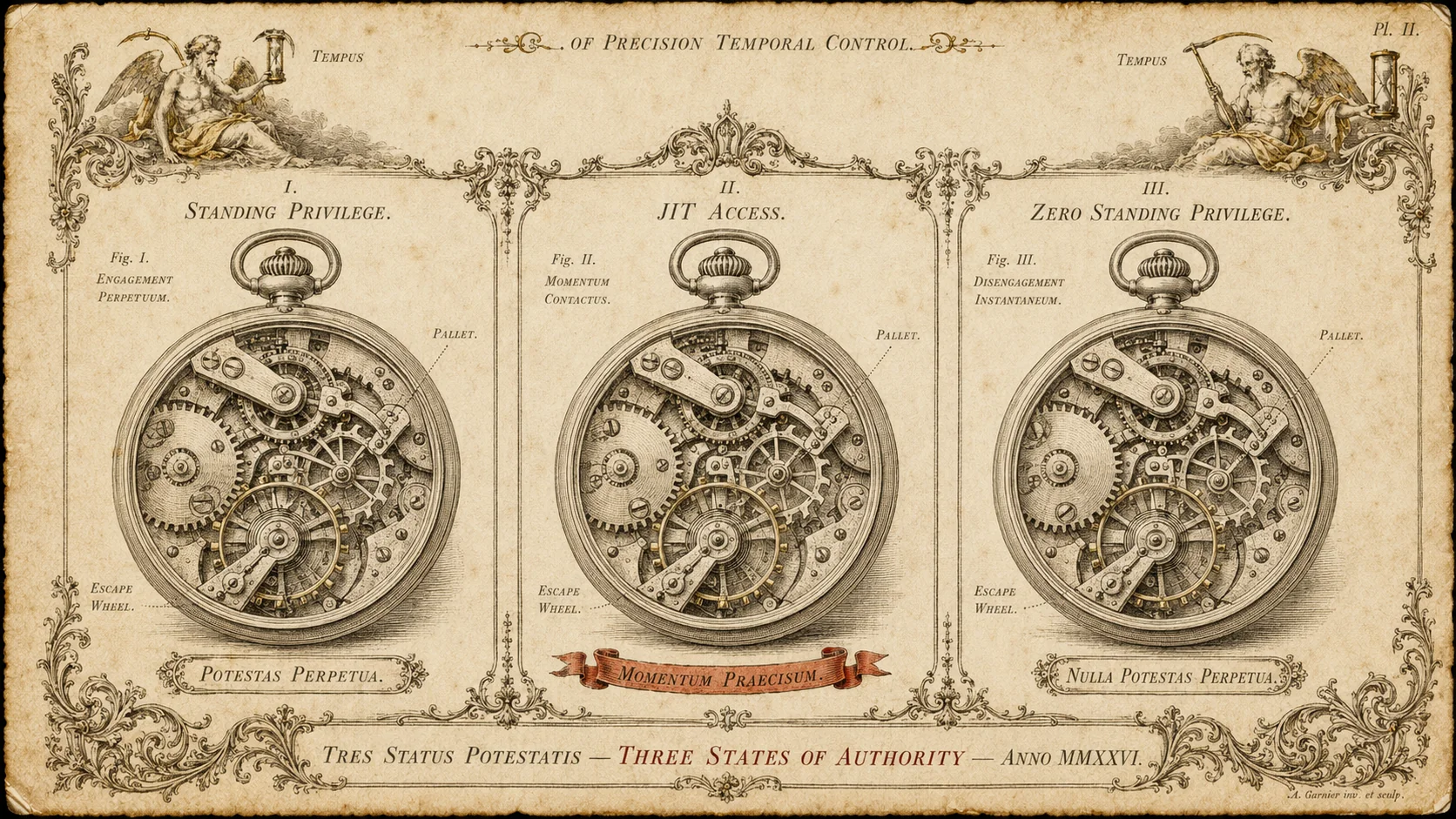 Three states, increasing security posture. Standing privilege is the legacy default; JIT is the operational mechanism; ZSP is the architectural target. Most 2026 mature deployments are running JIT for specific segments and progressing toward ZSP over time.
The three states, defined operationally
Each state has concrete operational markers. The strategic question for any workforce segment is which state describes the current operational reality and which state is the appropriate target.
| Marker | Standing Privilege | JIT Access | Zero Standing Privilege |
|---|---|---|---|
| Default entitlement state | Granted continuously | Not granted; available on request | Not granted; available on request |
| Activation trigger | None — always active | Explicit request + approval | Explicit request + approval |
| Time bound | None | Explicit expiration | Explicit expiration |
| Coverage scope | Full enterprise | Specific workforce segments | Full enterprise within scope |
| Dormant-period exposure | Continuous (24/7) | None | None |
| Audit trail per access | Login event only | Request + approval + grant + revoke | Request + approval + grant + revoke |
| Operational friction | None at access time | Approval workflow | Approval workflow |
| Compromise blast radius | Full standing entitlement | Time-bounded scoped entitlement | Time-bounded scoped entitlement |
| 2026 maturity | Stage 2 default | Stage 4 capability | Stage 5 capability |
Standing privilege is the legacy default. A user account is provisioned with a set of entitlements; the entitlements remain active until the user is deprovisioned (or until the certification cycle catches the entitlement and removes it). The model is operationally simple and dominates Stage 1 and Stage 2 IGA maturity. The cost is the dormant-period attack surface — every entitlement is exploitable at every moment, whether the user is actively working or not.
JIT access is the operational alternative. The entitlement is not granted by default; the user requests it when they need it; an approval workflow grants the entitlement with an explicit expiration timestamp; the entitlement auto-revokes when the time bound passes. The model is operationally appropriate for high-risk workforce segments where the security benefit of bounded exposure justifies the workflow friction.
Zero Standing Privilege is the architectural state where JIT is the only access pattern within scope. No standing privilege exists; every entitlement requires explicit per-task grant. ZSP is rarely achieved enterprise-wide; it's typically achieved within scope (privileged operators, financial-system users, defense workforces) while the broader workforce continues to operate under JIT-augmented or standing-privilege models.
The strategic question is not "do we want ZSP" but "for which workforce segments is JIT operationally appropriate, and within those segments is ZSP achievable as a target." Most 2026 mature deployments are running JIT for specific segments with ZSP as the eventual target for the highest-risk among them.
The four architectural patterns that enable JIT
JIT access works in 2026 deployments when four architectural patterns compose. The patterns are operationally distinct; deploying some without the others produces partial JIT that still leaves significant standing-privilege residue.
1. Time-bounded access. Every JIT grant carries an explicit expiration timestamp. The default time window depends on the use case — 15-30 minutes for routine privileged operations, 1-4 hours for sustained tasks like incident response or complex deployments, 8-12 hours for shift-based operational work. The expiration is enforced by the access platform; the entitlement removes itself when the timestamp passes regardless of whether the user is still actively working. Operationally, this means the user may need to re-request elevation if a task takes longer than the window — which is friction the user notices but the security architecture requires.
2. Workflow-attested elevation. The elevation request goes through structured approval before the entitlement is granted. Approval can be lightweight (manager auto-approve for routine cases) or heavy (security team explicit review for high-risk cases). The workflow records the elevation rationale — what task is being performed, what business justification supports the elevation, what risk acceptance applies — as audit evidence. The audit trail is what distinguishes JIT from "permanent elevation with extra steps"; the rationale per grant is what supports forensic reconstruction when something goes wrong.
3. Risk-evaluated approval. The approval automation considers signals beyond manager judgment alone. The user's behavioral baseline. Recent risk flags from the broader identity-security envelope. Geographic and network context (a JIT request from an unusual geography may trigger additional review). Device posture (is the device managed, compliant, recently flagged). Target-system sensitivity (elevation to a payment system requires different scrutiny than elevation to a development environment). Time-of-day context (elevation requests outside normal working hours warrant different treatment). The signals feed into a risk score that drives whether the elevation gets auto-approved with light evidence, requires explicit human approval, or gets denied outright pending additional verification. The CGov ITDR piece covers the behavioral signal layer this depends on.
4. Auto-revocation. The entitlement removes itself when the time bound expires or when usage signals indicate the task is complete. The platform doesn't depend on user discipline to release the privilege. Auto-revocation prevents the most common JIT failure mode — users request elevation for "a quick fix" and never come back to release it, accumulating residual standing privilege over time. Mature deployments combine time-based auto-revocation (the timer expires) with usage-based auto-revocation (the system observes that the user has finished the operation and revokes early).
The four patterns compose. Time-bounded access without workflow attestation produces grants without rationale records. Workflow attestation without risk evaluation produces approvals that don't catch behavioral anomalies. Risk evaluation without auto-revocation produces well-evaluated grants that persist past their useful life. The composition is what produces operational JIT.
The five workforce segments where JIT is operationally mature in 2026
Not every workforce segment needs JIT. For most users at most resources, standing entitlements scoped to role context produce acceptable security at acceptable operational cost. Five segments are different — the security benefit of JIT justifies the workflow friction.
1. Privileged operators. Domain administrators, database administrators, infrastructure operators, security engineers with broad access. The segment whose sessions can cause significant operational damage if compromised. JIT for this segment integrates with the PAM platform — when a privileged operator needs to perform a privileged task, they request elevation through PAM, the workflow approves, the PAM platform issues a time-bounded credential, the operator performs the task, the credential auto-revokes. The CGov PAM piece covers the PAM platform layer this composes with.
2. Production-system access for engineering. Software engineers who need access to production systems for debugging, deployment, or incident response. The segment shouldn't have standing production access — production-impact actions should require explicit per-task elevation with audit trail. JIT for engineering production access typically integrates with the change-management system (the elevation request links to a change ticket) and with the observability layer (the JIT-granted session is monitored for anomalies). The pattern is operationally common in 2026 mature engineering organizations.
3. Financial-system operators. Treasury, payment processing, trading, accounting reconciliation. The segment whose sessions can move money. JIT for financial-system access is increasingly required by 2026 regulatory frameworks (PCI DSS v4.0, SOX-aligned IT general controls, banking-specific guidance). The elevation typically requires multi-party approval for high-value transactions and integrates with the financial-system audit infrastructure.
4. Incident-response teams. Security operations center analysts, incident responders, threat hunters. During an active incident, the team needs rapid elevation to a broad set of systems to investigate and contain the threat. JIT for incident response is structured around the incident itself — when an incident is declared, the response team gains JIT access scoped to the incident's investigation and containment needs, and the access auto-revokes when the incident closes. The pattern is the "break-glass" use case formalized into a workflow rather than left as an exceptional manual process.
5. AI agents. AI agents that authenticate per invocation and act on scoped delegation tokens (covered in detail in the Agentic Authentication piece on ICC) fit the JIT model naturally. Each agent invocation produces a scoped delegation token with explicit user-on-behalf-of context, narrow scope, and short expiration. The token is JIT by construction; the agent doesn't hold standing privilege between invocations. The architectural pattern is the same as human JIT but applied per-invocation rather than per-task.
The five segments share an architectural property: the security benefit of bounded entitlement scope and time-bounded exposure outweighs the operational cost of workflow friction. For the broader workforce — routine office workers, standard application users, frontline staff — standing entitlements scoped to role context remain operationally appropriate.
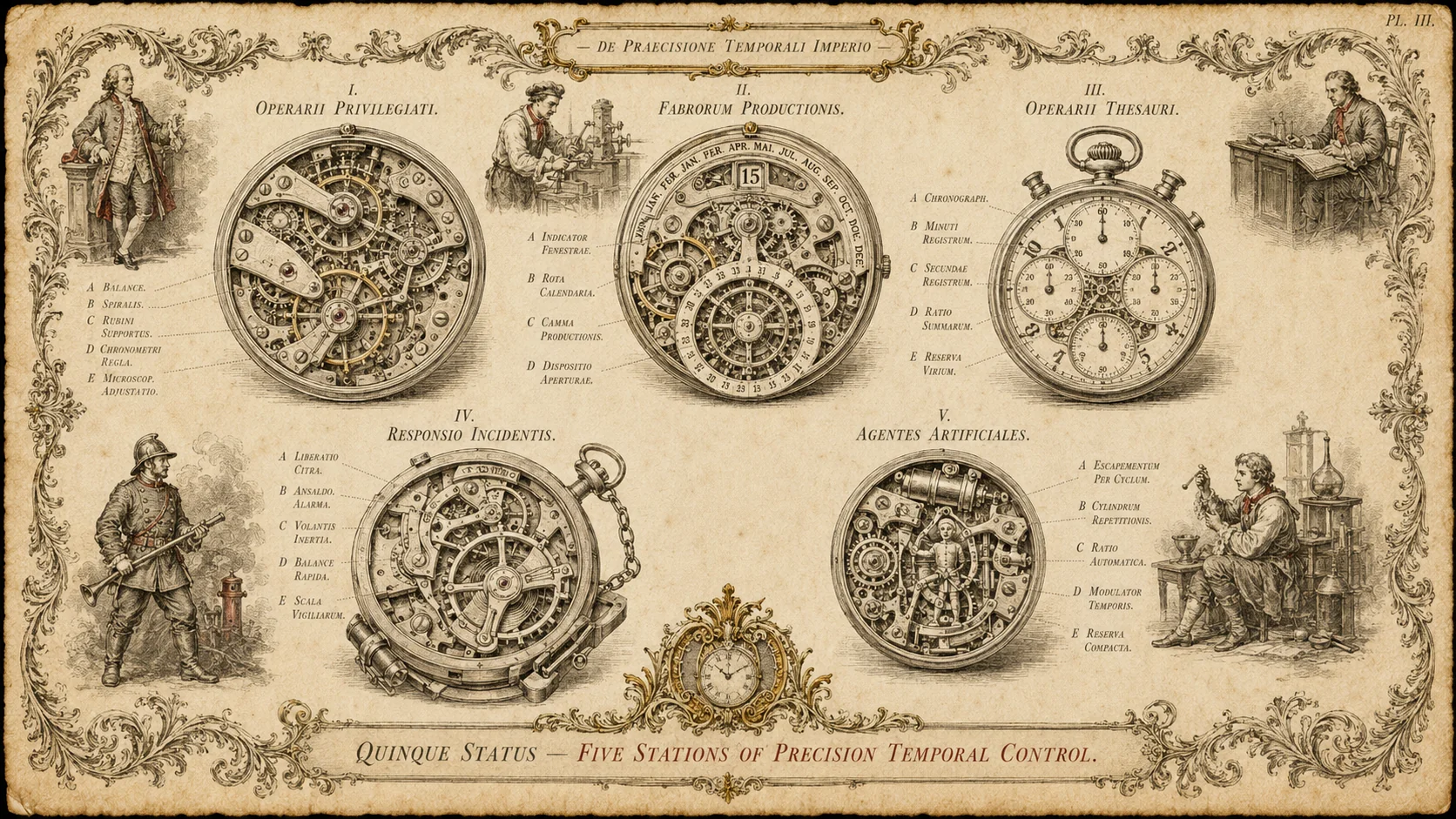 Five segments where JIT is operationally mature in 2026. The pattern doesn't need to be applied to every workforce; applying it to the segments where the security benefit justifies the friction is the architecturally appropriate target.
Where JIT access breaks operationally
Three failure modes recur in 2026 JIT deployments. Each is operationally addressable when treated as a design constraint; each is also extremely common when treated as an afterthought.
Over-friction. The approval workflow is so slow or so complicated that users develop workarounds. They request elevation for longer time windows than they actually need to avoid re-requesting. They share approved elevation sessions with colleagues to skip the approval step for similar work. They fall back to break-glass paths for routine work. They route around the JIT system entirely, asking colleagues with standing privilege to perform the operations on their behalf. The mitigation is workflow tuning: auto-approval for low-risk routine requests with clean signals; fast paths for the common cases; friction reserved for genuinely high-risk requests. The 2026 mature JIT deployments measure approval latency at the median and at the 95th percentile, and they treat median latency under two minutes as the operational target for routine elevations.
Approval bottleneck. The designated approver becomes a constraint on the team's velocity. When the approver is in a meeting, on PTO, in focus time, or otherwise unavailable, the team can't get elevated and work stalls. The pattern produces pressure on the approver to either approve everything quickly without engagement (the JIT equivalent of attestation fatigue) or delegate approval authority informally (which breaks the audit trail). The mitigation is approval routing with explicit backups (multiple approvers per scope, with time-based escalation if the primary doesn't respond within a defined SLA), risk-evaluated automation that handles routine low-risk requests without human approval, and explicit approver-availability management so the team knows who's currently on call.
Broken-glass-scenario gaps. Every JIT deployment needs a fallback path for cases when the JIT system itself is unavailable — network partition, IdP outage, JIT platform incident. The fallback path typically grants emergency access through a separate mechanism (often an out-of-band credential vault, a hardware-based emergency credential, or direct administrative override). The failure mode is when the fallback becomes the new standing-privilege backdoor — administrators use it as the default rather than as the emergency. The mitigation is heavy audit on the break-glass path (every use generates a high-priority audit event), mandatory post-incident review of each break-glass invocation, and operational discipline around its use (break-glass invocations are reviewed by security leadership; patterns of misuse trigger investigation). The 2026 mature deployments target break-glass usage at under 0.1% of total JIT elevations; deployments where break-glass usage runs higher have an operational discipline problem worth addressing.
The three failure modes compound. Over-friction drives users toward break-glass paths; broken-glass-scenario gaps then mean those break-glass paths produce uncontrolled exposure; approval bottlenecks accelerate the bypass behavior. The mitigations have to layer — workflow tuning plus approval routing plus break-glass discipline — to keep the operational reality aligned with the security architecture.
How JIT composes with the broader identity-security stack
JIT is one layer in the 2026 identity-security envelope. The composition with adjacent layers matters for both security outcome and operational coherence.
JIT + PAM. PAM is the platform layer that provides credential vaulting, session monitoring, and privileged credential management. JIT is the access pattern that determines when those privileged credentials get issued. The two compose — PAM holds the credentials and provides the operational infrastructure; JIT decides whether and when to issue them. The CGov PAM piece covers the platform layer this composes with.
JIT + IGA. IGA covers the broader entitlement governance — workflows, certifications, segregation-of-duty rules, lifecycle automation. JIT decisions integrate with IGA in two directions: the IGA-recorded entitlement state determines what a user is eligible to request via JIT (an entitlement they're not entitled to under IGA isn't requestable via JIT), and JIT grants produce audit-trail events that feed IGA's posture-audit layer.
JIT + ITDR. The behavioral monitoring layer (covered in the ITDR piece) watches JIT-granted sessions for anomalies. A JIT session that suddenly performs operations outside the requested task scope, or that exhibits behavior inconsistent with the user's baseline, triggers detection signals even though the JIT grant itself was legitimate. The composition catches the case where the JIT request was approved but the session is being misused.
JIT + Agentic Authentication. AI agents fit the JIT model naturally. The Agentic Authentication piece on ICC covers the per-invocation delegation token pattern. Each agent invocation is essentially a JIT grant — scoped to the specific task, time-bounded to the invocation, auto-revoked when the invocation completes. The architectural patterns this piece describes apply to agentic identity as much as to human identity.
JIT + Continuous Authentication. The ICC Continuous Authentication piece covers the post-authentication assurance re-evaluation layer. JIT grants compose with continuous authentication — a JIT-granted session may trigger step-up authentication when the user attempts the actual privileged operation, ensuring that the credential class supporting the privileged action is appropriate to its sensitivity.
The 2026 reference path
Treat ZSP as the architectural target and JIT as the operational mechanism. Full enterprise-wide ZSP is rarely achievable; JIT-everywhere-it-matters with ZSP for the highest-risk segments is the realistic 2026 target.
Identify the workforce segments where JIT is operationally appropriate. The five segments this piece documents (privileged operators, engineering production access, financial-system operators, incident response teams, AI agents) cover the bulk of where JIT delivers value in 2026 deployments. The broader workforce typically doesn't need JIT for routine access.
Deploy the four architectural patterns together. Time-bounded access, workflow-attested elevation, risk-evaluated approval, auto-revocation. Skipping any of them produces partial JIT that leaves significant residue.
Tune the operational reality continuously. Approval latency (median under two minutes for routine elevations), break-glass usage rate (under 0.1% of total elevations), approval engagement quality (audit evidence that approvers actually examined the request). The metrics catch failure-mode drift before it becomes systemic.
Compose with the broader stack. PAM platform layer, IGA governance workflow, ITDR behavioral monitoring, Agentic Authentication for AI agents, Continuous Authentication for high-risk operations. The composition is what produces the 2026 identity-security envelope.
Standing privilege is the legacy access pattern. JIT is the operational mechanism that replaces it for the segments where the security benefit justifies the friction. ZSP is the architectural target for the highest-risk subsets. The patterns are mature in 2026. The deployment discipline determines whether the dormant-privilege attack surface gets bounded or remains the dominant incident-producer it has been for the last decade. Close the gap deliberately.
ABOUT THE AUTHOR

More from Access Management

PIM vs PAM vs PUM: Privileged Access Defined for 2026
PIM, PAM, and PUM get used interchangeably and mean three different things. PIM manages who holds privileged identity and which roles carry it. PAM controls how privilege is exercised through vaulting, session control, and just-in-time elevation. PUM manages the shared privileged accounts nobody personally owns. The 2026 reference on distinguishing the three terms, where they overlap, and where to start.

DNS as Identity Infrastructure: A 2026 Reference
DNS resolution, DNSSEC integrity, and DNS poisoning as a credential-harvesting vector — the 2026 reference on treating DNS as identity infrastructure, not network plumbing.
Password Hash Synchronization in 2026: Hybrid AD to Entra ID
Password hash synchronization keeps on-prem Active Directory and Microsoft Entra ID authoritative together — how the sync cycle works, its security tradeoffs, and where it fits against federation.