Universal Passwordless Access
Browser-based login for any Windows device — works on shared workstations, VDI, and Citrix with no TPM or hardware lock-in.
Most passwordless tools lock your credential to one device or one phone.
That fails on shared desks, VMs, or no-phone sites.
Hybrid Passwordless Login isn't tied to any device — the credential moves with the user.
The password underneath stays governed the whole time.










































Protecting the world’s workforce since 1997 • Over 15 Million Licenses Sold
The Passwordless Illusion
Most passwordless tools eliminate passwords at the login screen — for the segment of the workforce whose hardware cooperates. Beneath the surface, passwords still exist in Active Directory, Entra ID, and legacy systems, and 30–50% of the workforce can't use the rollout at all: shared workstations, Citrix and VDI, and high-security sites where phones are banned. The risk is not that passwordless is wrong. The risk is a passwordless veneer over an ungoverned credential layer.
What it is
Avatier Hybrid Passwordless Login is a browser-based, zero-trust Windows credential provider — passwordless authentication software that works on any device. It unites enterprise passwordless authentication with continuous password governance, supports passkey enterprise management, and delivers zero trust authentication solution for organizations that need passwordless login without hardware token rollouts or PKI infrastructure.
Hybrid Passwordless Features
Passwordless login on every device — shared, virtual, and deviceless — with the passwords underneath still governed by Password Firewall.
Browser-based login for any Windows device — works on shared workstations, VDI, and Citrix with no TPM or hardware lock-in.
Unifies passwordless authentication with active password governance, keeping modern and legacy systems compliant.
Automatic enrollment on first login — rollout in hours, not months, with no provisioning, QR codes, or app downloads.
Every credential is breach-checked and policy-compliant in real time through Avatier Password Firewall™.
Passwordless access via the Identity Challenge Card in defense, healthcare, and manufacturing sites where phones are banned.
SIP-aware, multilingual voice authentication for 24/7 zero-trust recovery with zero hold time.
Integrated Self-Service Reset applies the same MFA and compliance policies for instant, secure account recovery.
A single console for MFA, policy, and audit — one control plane for every identity event.
Entirely hardware- and PKI-independent — a secure browser interface delivers zero-trust with no hardware refresh.
Deploys in hours, not months, at about one-third the cost of device-bound competitors.
Hybrid Passwordless Login gives every stakeholder a different win: real passwordless with real governance for security, full workforce coverage on existing hardware for IT leadership, one-third the program cost for finance, a modernization story that finishes for executives, a deployable rollout for IAM teams, and a differentiated coverage claim for analysts and investors.
Hybrid Passwordless Login gives enterprises a governed path to passwordless — MFA-verified login on every device with the buried credentials synchronized, validated, and logged beneath. It supports security reviews and compliance workflows by helping teams prove that passwordless access and the credential layer underneath were both governed, controlled, and auditable.
MFA-verified login on every device
The buried passwords stay controlled
Proof for both layers
Built for Every Workforce Segment
Hybrid Passwordless Login deploys onto the hardware, virtual desktops, identity systems, and MFA providers your teams already operate — passwordless coverage reaches 100% of the workforce without a hardware refresh or a new identity stack.

Run passwordless login against the identity environments you already manage — Windows, Active Directory, and Entra ID — with the buried credentials synchronized and governed beneath (Windows, Entra ID, Active Directory).
Use existing MFA methods as the passwordless factor — the same prompt users already know, now replacing the password instead of supplementing it (Microsoft Authenticator, Okta Verify, Duo, RSA, Google Authenticator).
Deploy the browser-based credential provider natively in virtualized environments — no TPM passthrough, no per-VM provisioning — so contact centers, kiosks, and published desktops go passwordless too (Citrix, Azure Virtual Desktop).

Cover deviceless, air-gapped, and phone-restricted sites with the Identity Challenge Card, while Password Firewall keeps the credentials that remain governed and breach-checked (Identity Challenge Card, Have I Been Pwned, Password Firewall).
| Capability | Avatier | Others / Industry-Wide |
|---|---|---|
| Passwordless on shared workstations, VDI & Citrix | Full | Partial |
| Works with no TPM chip | Full | Partial |
| No PKI / certificate infrastructure | Full | Partial |
| No mandatory mobile device | Full | Partial |
| Deviceless MFA (Identity Challenge Card) | Full | Partial |
| Governs the underlying directory passwords | Full | Partial |
| Automatic first-login enrollment (no QR / app) | Full | Partial |
| AI voice authentication (call center) | Full | Partial |
| Hybrid passwordless + governance in one framework | Full | Partial |
| One-third the cost, deploys in hours | Full | Partial |
Native / full capabilityPartial or add-onNot offered
Side By Side
TPM-based and mobile-bound passwordless stall at the segment of the workforce whose hardware cooperates. Hybrid Passwordless Login is hardware-agnostic and browser-based, so shared workstations, Citrix, VDI, and phone-restricted sites are first-class — and the passwords that remain beneath stay governed by Password Firewall.
Device-bound passwordless asks the hardware for permission to modernize. Hybrid Passwordless Login covers every workforce segment — and governs the credentials that remain until the password is truly gone.
Rollout
Hybrid Passwordless Login is designed for endpoint IT and IAM teams to deploy with the tooling they already use — no PKI infrastructure, no TPM provisioning, no hardware refresh, and no user training program.
Deploy the lightweight browser-based credential provider to Windows endpoints and virtual desktops via MSI, GPO, or Intune — the same rollout path your endpoint team already uses for any managed software.
Register your existing MFA providers as the passwordless factor and connect the identity environments the credential provider authenticates against — Active Directory, Entra ID, and connected systems.
Users enroll invisibly on their next sign-in: the existing password is captured, encrypted, and synchronized once, and every login after that is passwordless — no QR codes, no app downloads, no help desk tickets.
Keep the buried passwords synchronized, validated, and breach-checked through Password Firewall so the credential layer stays governed and audit-ready while the workforce moves passwordless above it.
Endpoint IT and IAM teams can take the entire workforce passwordless — shared, virtual, deviceless, and mobile-restricted segments included — without rebuilding the environment.
Hybrid Passwordless Login greets users in their native language — covering 34 languages across the login experience and enrollment flow so global workforces go passwordless without bolt-on translation tooling.
 EnglishSupported
 SpanishSupported
 FrenchSupported
 GermanSupported
 JapaneseSupported
 Portuguese (Brazil)Supported
 Simplified ChineseSupported
 KoreanSupported
 ItalianSupported
 DutchSupported
 HindiCurrent Site
 ArabicSupported
 SwedishSupported
 Spanish (Mexico)Supported
 French (Canadian)Supported
 Portuguese (Portugal)Supported
 Traditional ChineseSupported
 RussianSupported
 PolishSupported
 TurkishSupported
 IndonesianSupported
 ThaiSupported
 DanishSupported
 NorwegianSupported
 FinnishSupported
 GreekSupported
 CzechSupported
 HungarianSupported
 SlovakSupportedCatalanSupported
 Arabic (Egyptian)Supported
 BengaliSupported
 UrduSupported
 SwahiliSupportedEnglishSupportedSpanishSupportedFrenchSupportedGermanSupportedJapaneseSupportedPortuguese (Brazil)SupportedSimplified ChineseSupportedKoreanSupportedItalianSupportedDutchSupportedHindiCurrent SiteArabicSupportedSwedishSupportedSpanish (Mexico)SupportedFrench (Canadian)SupportedPortuguese (Portugal)SupportedTraditional ChineseSupportedRussianSupportedPolishSupportedTurkishSupportedIndonesianSupportedThaiSupportedDanishSupportedNorwegianSupportedFinnishSupportedGreekSupportedCzechSupportedHungarianSupportedSlovakSupportedCatalanSupportedArabic (Egyptian)SupportedBengaliSupportedUrduSupportedSwahiliSupported
Hybrid Passwordless answers a different problem for every stakeholder. CISOs want passwordless without an ungoverned credential layer beneath it. CIOs want full workforce coverage on existing hardware. CFOs want the program at a defensible cost. CEOs want a modernization story that finishes. IT and IAM teams want a rollout they can ship. Compliance teams want evidence across both layers. Analysts want to understand the architecture bet.
Passwordless Without an Ungoverned Layer Beneath
Recognized on Gartner Peer Insights
Based on 14 verified customer reviewsIdentity Governance and Administration
Read the reviews on Gartner Peer InsightsHybrid Passwordless Login is Pillar 6 — the passwordless destination layer of Credential Governance inside Avatier Identity Anywhere. Explore the supporting pillar briefs to see how Avatier extends Credential Governance across password enforcement, self-service recovery, help-desk-assisted resets, login-screen recovery, and hybrid passwordless access.
Further reading
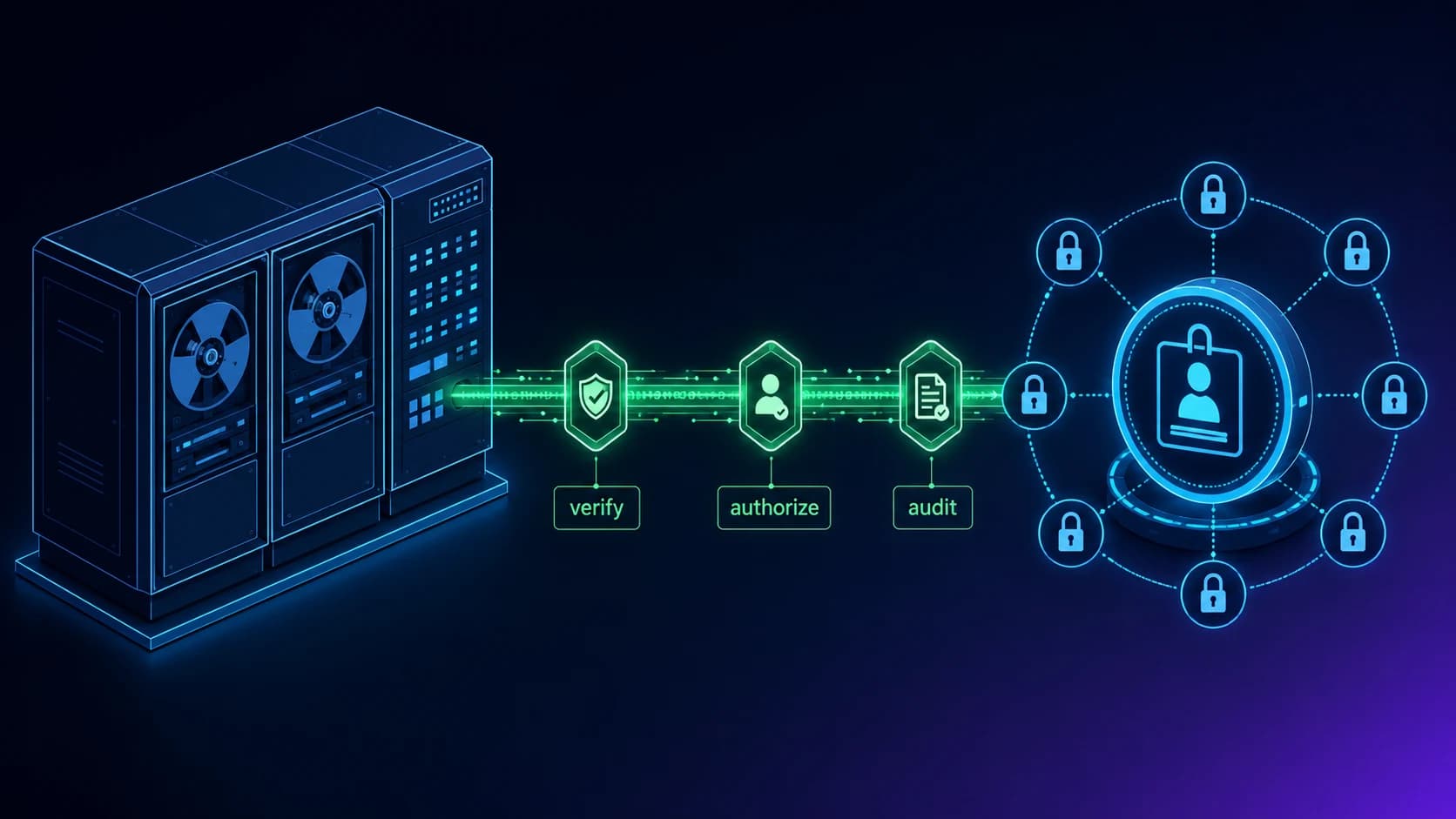
Mainframes still hold the records of authority for banking, insurance, government, and healthcare. The 2026 architecture for modernizing mainframe identity — keeping RACF, ACF2, and Top Secret in place while integrating them into zero-trust governance.
Read more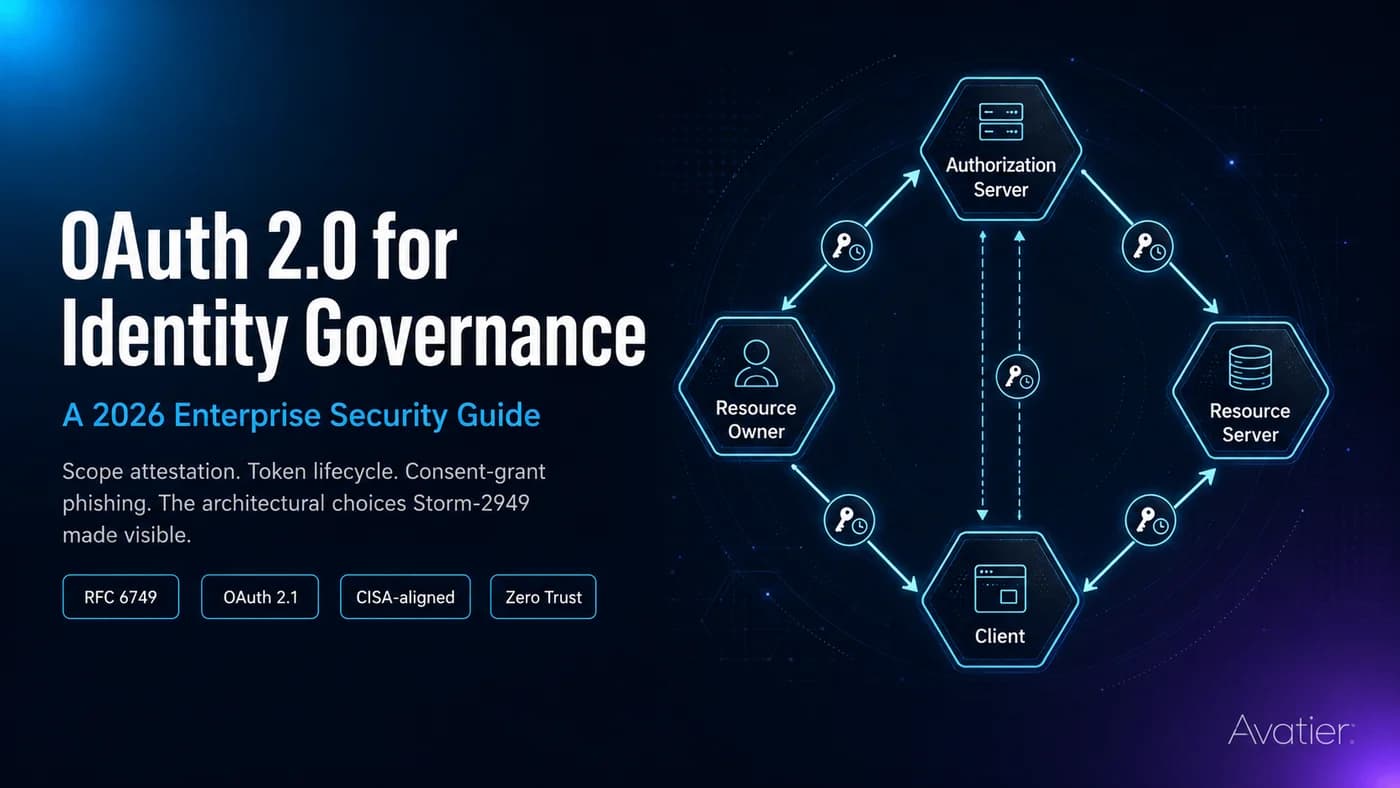
OAuth 2.0 in 2026 enterprise identity governance — scope attestation, token lifecycle, consent-grant phishing, and the architectural choices Storm-2949 made visible.
Read more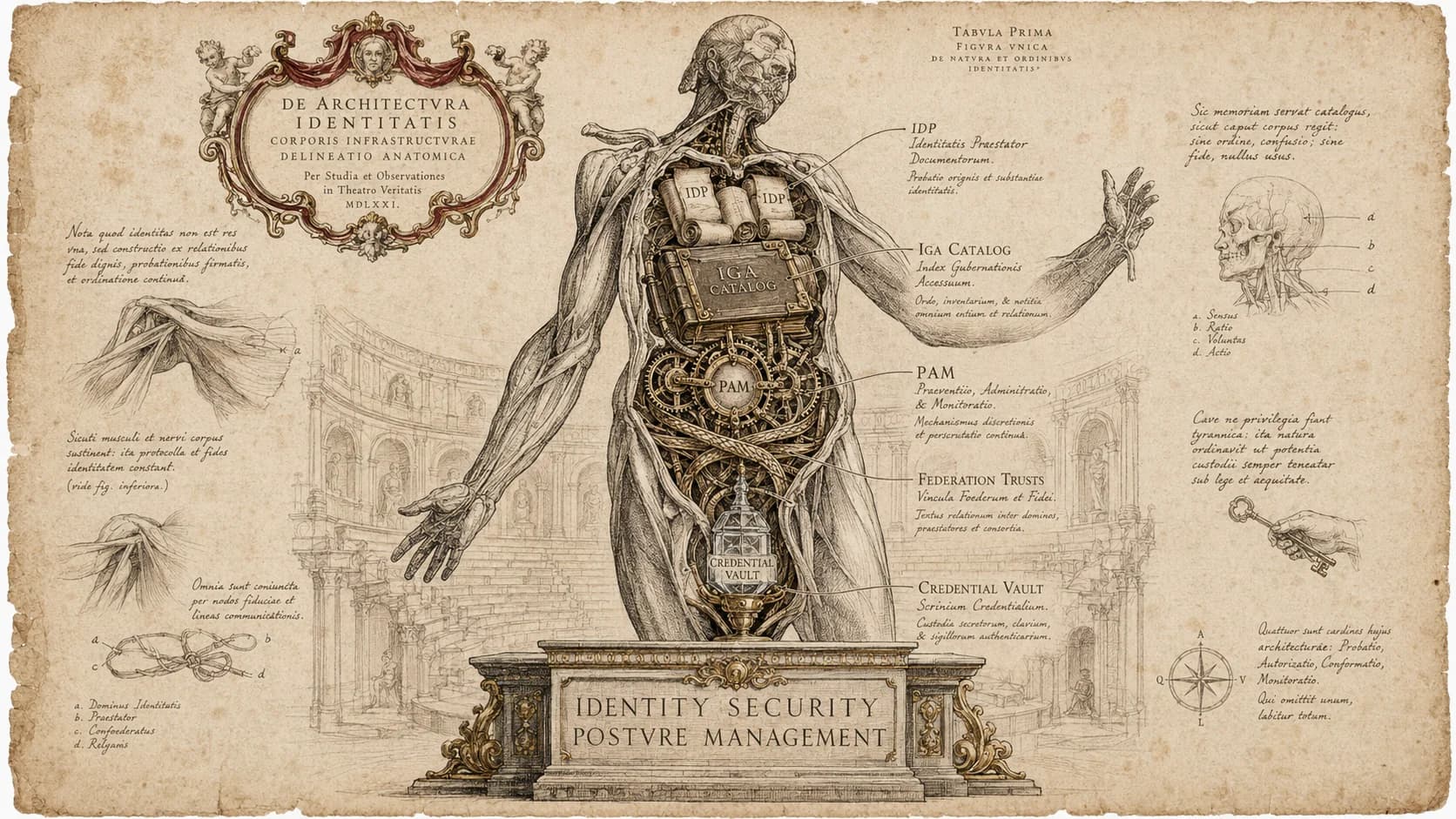
ISPM is the emerging analyst category that sits above IGA and beside ITDR — the preventive posture audit, drift detection, and identity-asset inventory layer that answers 'is our identity infrastructure currently configured the way our policy says it should be.' The 2026 enterprise reference on the evaluation domains, vendor landscape, and integration architecture.
Read moreSee It In Your Environment
Take the whole workforce passwordless — shared workstations, Citrix, VDI, and phone-restricted sites included — with the buried credentials governed underneath.
No commitment. 30-minute walkthrough. Same-day response.
Savings Calculator
Enter your company size and see how much your help desk spends on password resets — and how much Avatier Credential Governance saves.
Avatier Credential Governance reduces your cost by
Over 1 year