POSTS IN

IAM & Identity Governance

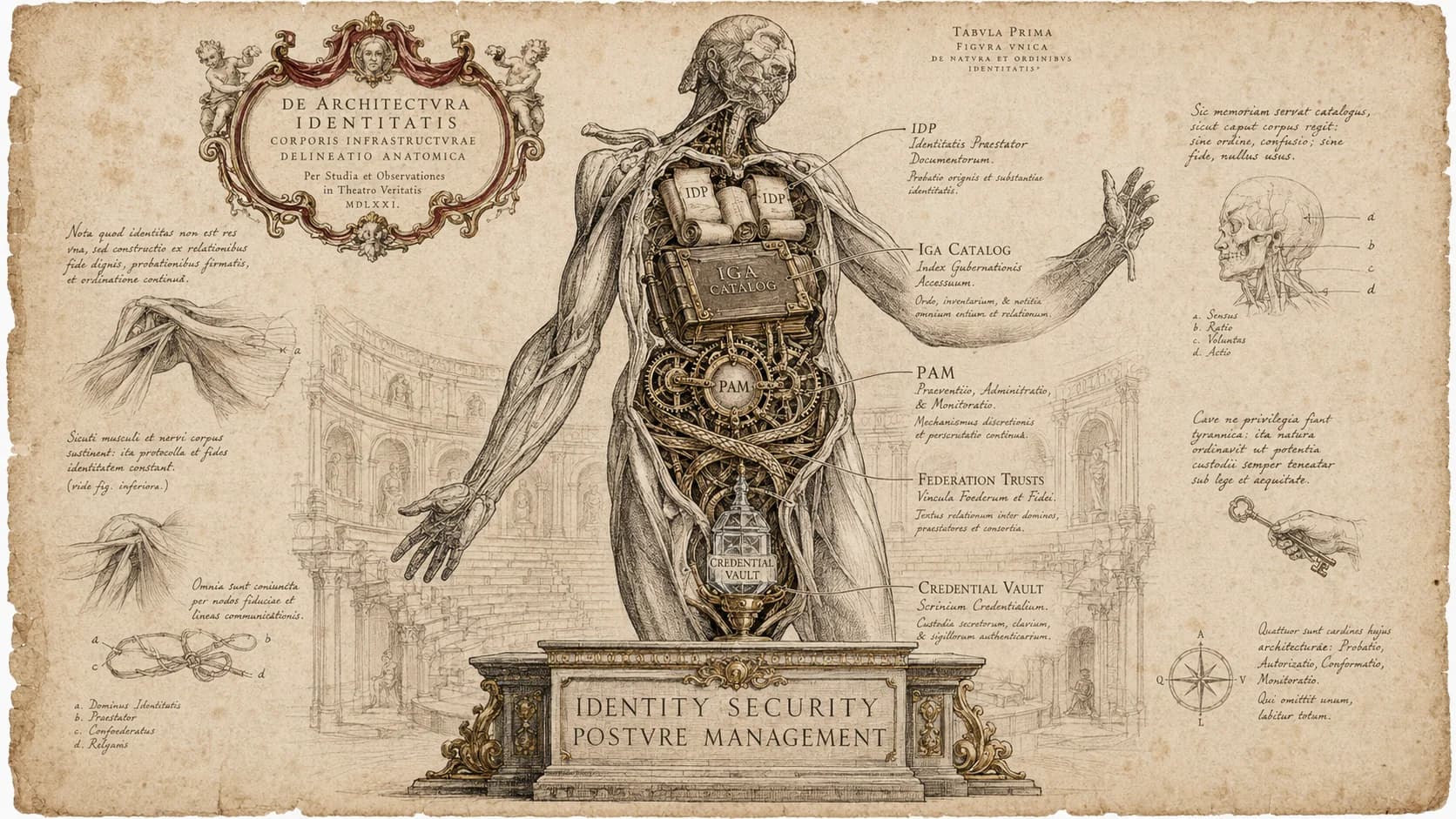
Identity governance, identity lifecycle, user provisioning, and IGA program design.

Showing 28

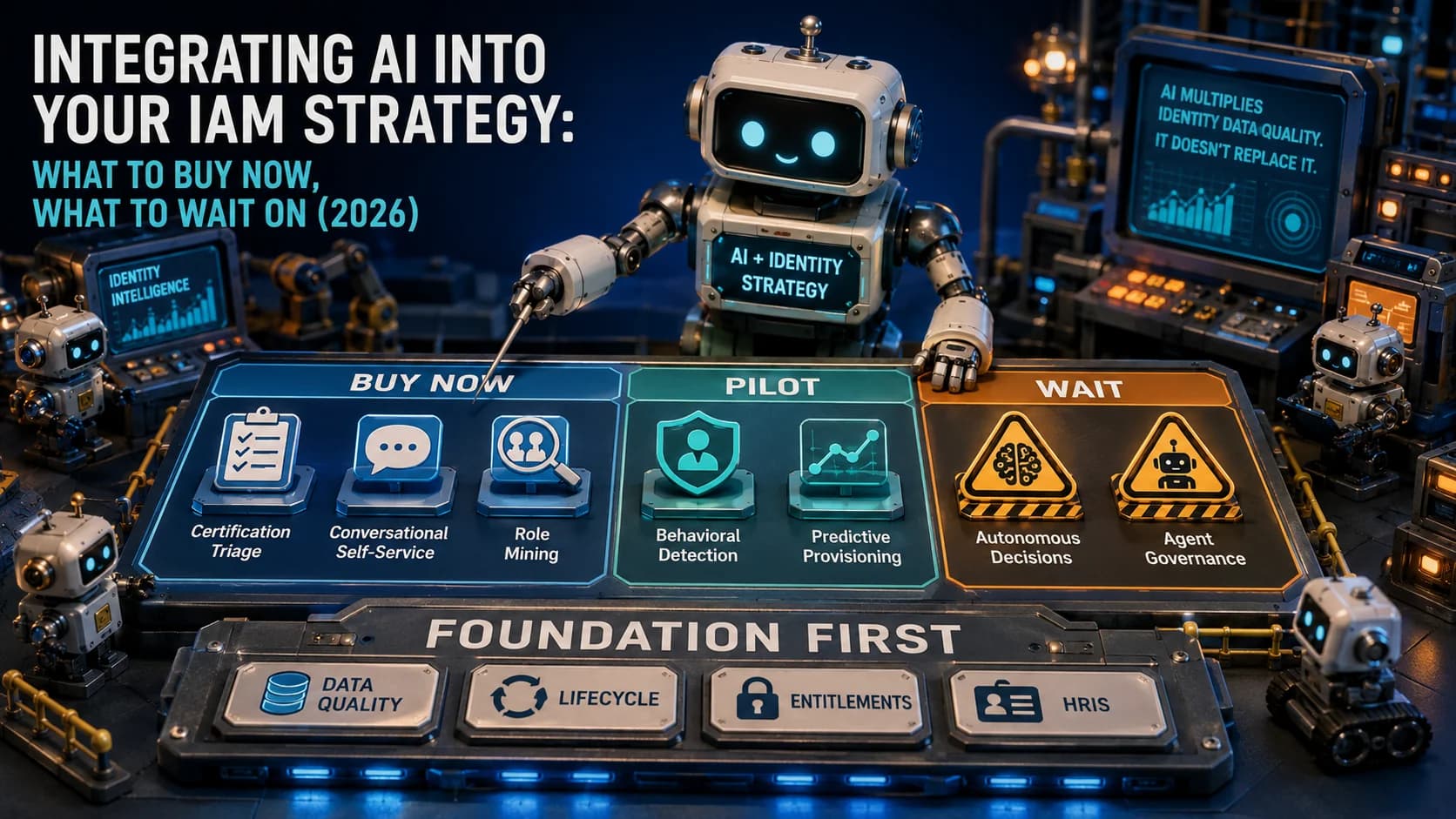
Integrating AI into IAM strategy 2026 executive roadmap — the buy-now tier of AI capabilities with clear mechanisms and near-term payback (certification triage that ranks reviewer attention by anomaly, conversational self-service that deflects help desk tickets, and role mining that proposes candidate roles from observed access patterns), the pilot tier requiring careful scoping (behavioral detection and predictive provisioning), the wait tier where vendor claims outrun delivery (autonomous access decisions and agent governance), the five-dimension readiness test that determines whether AI produces value or an expensive description of an existing mess, and the sequencing rule that AI multiplies identity data quality rather than substituting for it.
IAM & Identity Governance

Integrating AI Into Your IAM Strategy: What to Buy Now, What to Wait On (2026)

Every identity vendor's 2026 roadmap says AI. Most enterprises can't tell which parts will pay for themselves next quarter and which are demos with a release date attached. After three decades building identity automation, my read: three AI capabilities are worth buying today, two are worth piloting, and one category is worth refusing until the vendors can answer five questions. Plus the readiness test that decides whether any of it works for you — and the ordering mistake that wastes more AI budget than any bad vendor choice.

17 juli 2026Nelson Cicchitto
Read more
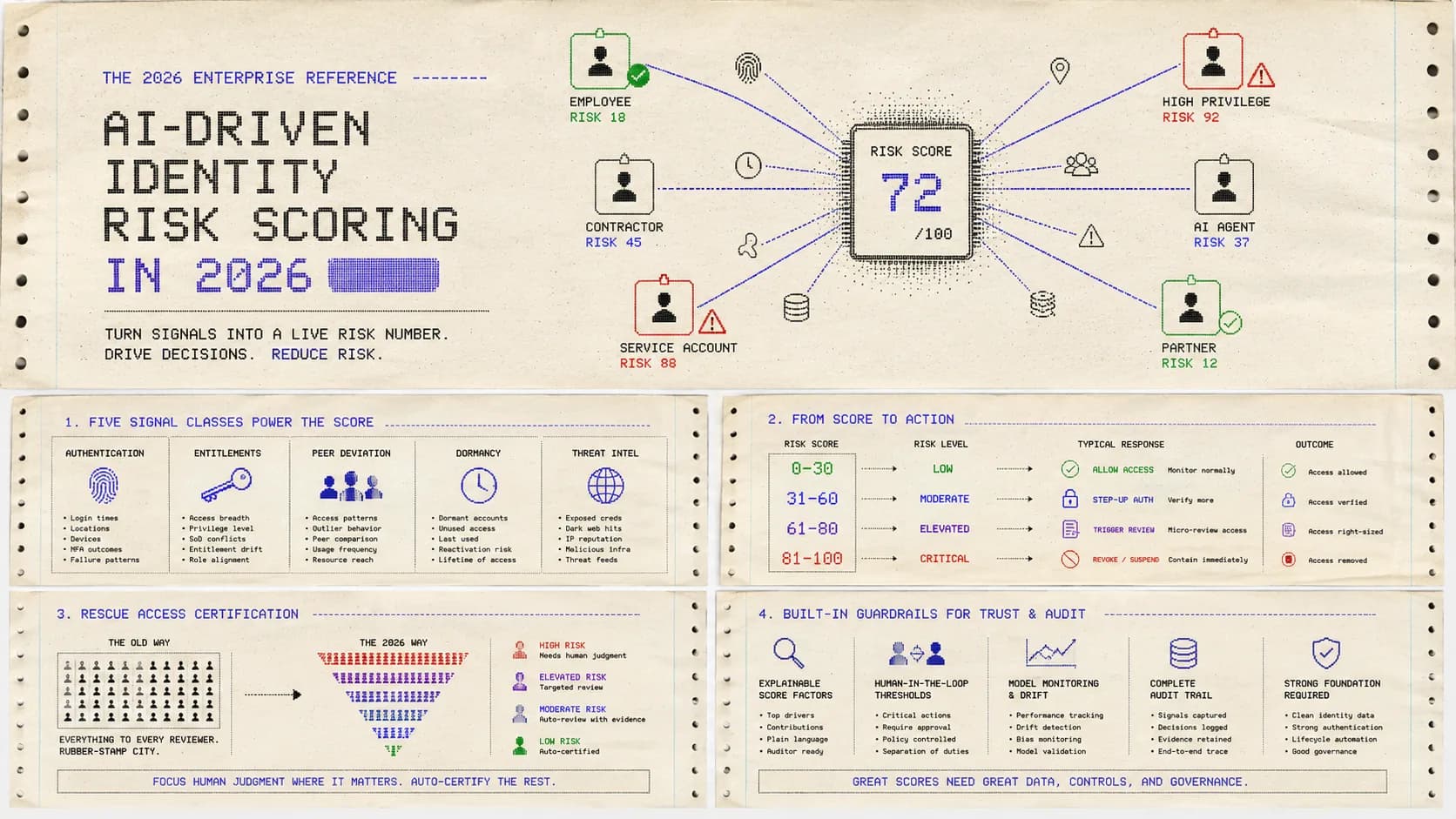
AI and behavioral analytics for identity monitoring 2026 enterprise reference — how machine learning models establish per-user and per-peer-group behavioral baselines from four telemetry sources (authentication events, entitlement state, resource access patterns, and device and network context), what anomaly detection actually catches that static rules miss (credential-valid account takeover, insider privilege abuse, and slow lateral movement), the false-positive economics that determine whether an analyst team trusts the model, and the honest limits of behavioral detection at enterprise scale.
IAM & Identity Governance

AI and Behavioral Analytics for Identity Monitoring: The 2026 Enterprise Reference

Static identity rules catch the attacks that announce themselves. They miss the ones that log in with valid credentials and behave almost normally. The 2026 reference on AI-driven identity monitoring — what behavioral analytics actually detects, the four telemetry sources that make or break the model, the false-positive economics nobody budgets for, and the honest limits of anomaly detection at enterprise scale.

17 juli 2026Marcelo Victor
Read more
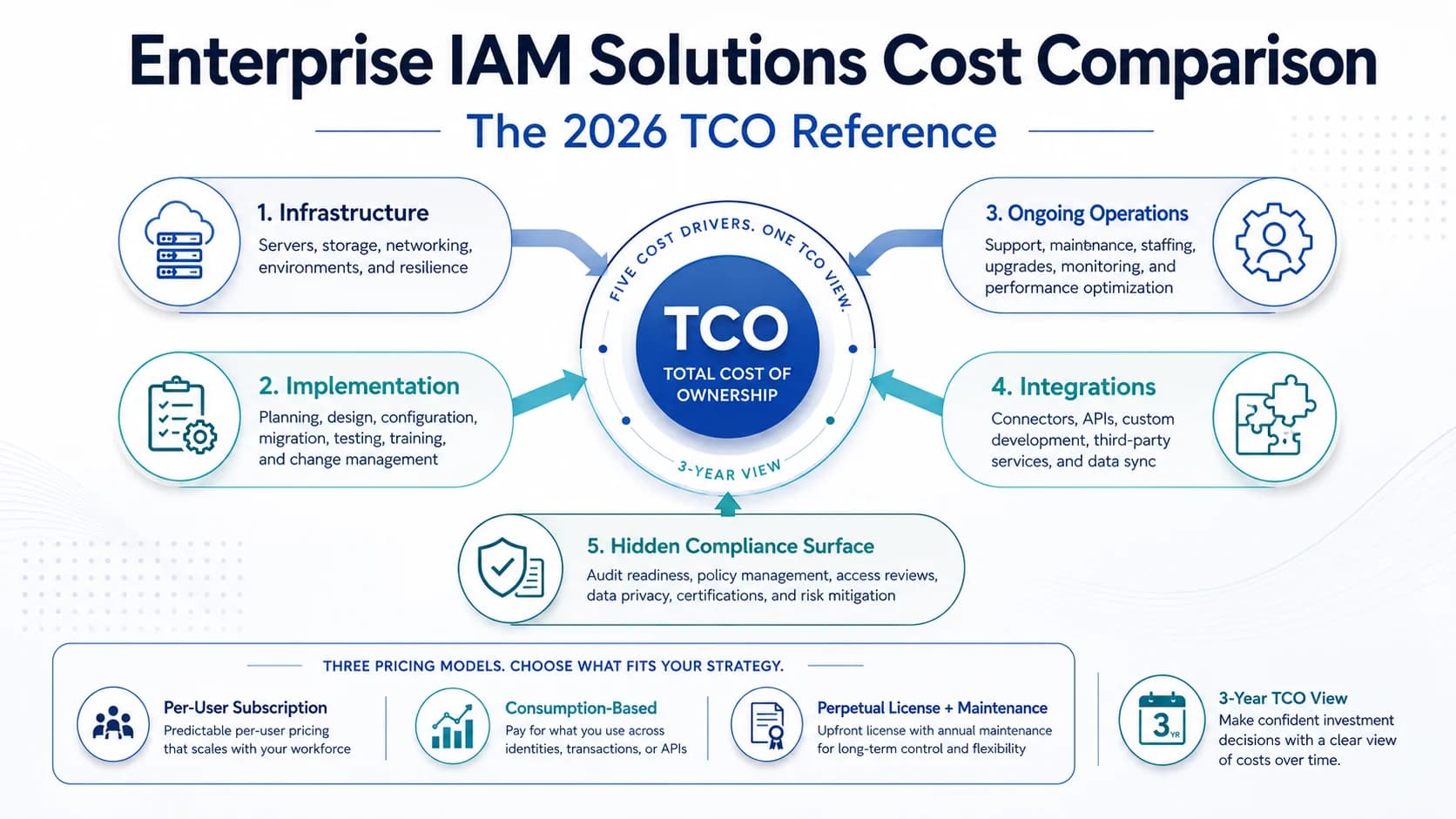
IAM costs and investment readiness 2026 enterprise reference — the five cost drivers of identity and access management investment (licensing, implementation and professional services, infrastructure, ongoing operations, and hidden compliance surface), the four return categories that justify the spend (help desk reduction, breach risk reduction, audit and compliance efficiency, workforce productivity), and the five-dimension readiness assessment covering identity data quality, ownership model, process maturity, integration surface, and executive sponsorship that predicts whether an enterprise realizes IAM ROI or joins the stalled-program statistics.
IAM & Identity Governance

The Truth About IAM Costs: Is Your Business Ready to Invest in 2026?

IAM investment questions rarely fail on the ROI math — the math works. They fail on readiness: enterprises buy governance platforms before the identity data, ownership model, and process discipline exist to use them. The 2026 reference on what IAM actually costs across its five cost drivers, what the investment returns and when, and the five-dimension readiness assessment that predicts whether your organization will realize the ROI or join the roughly half of IGA programs that stall.

16 juli 2026Ekna Padmaraj
Read more
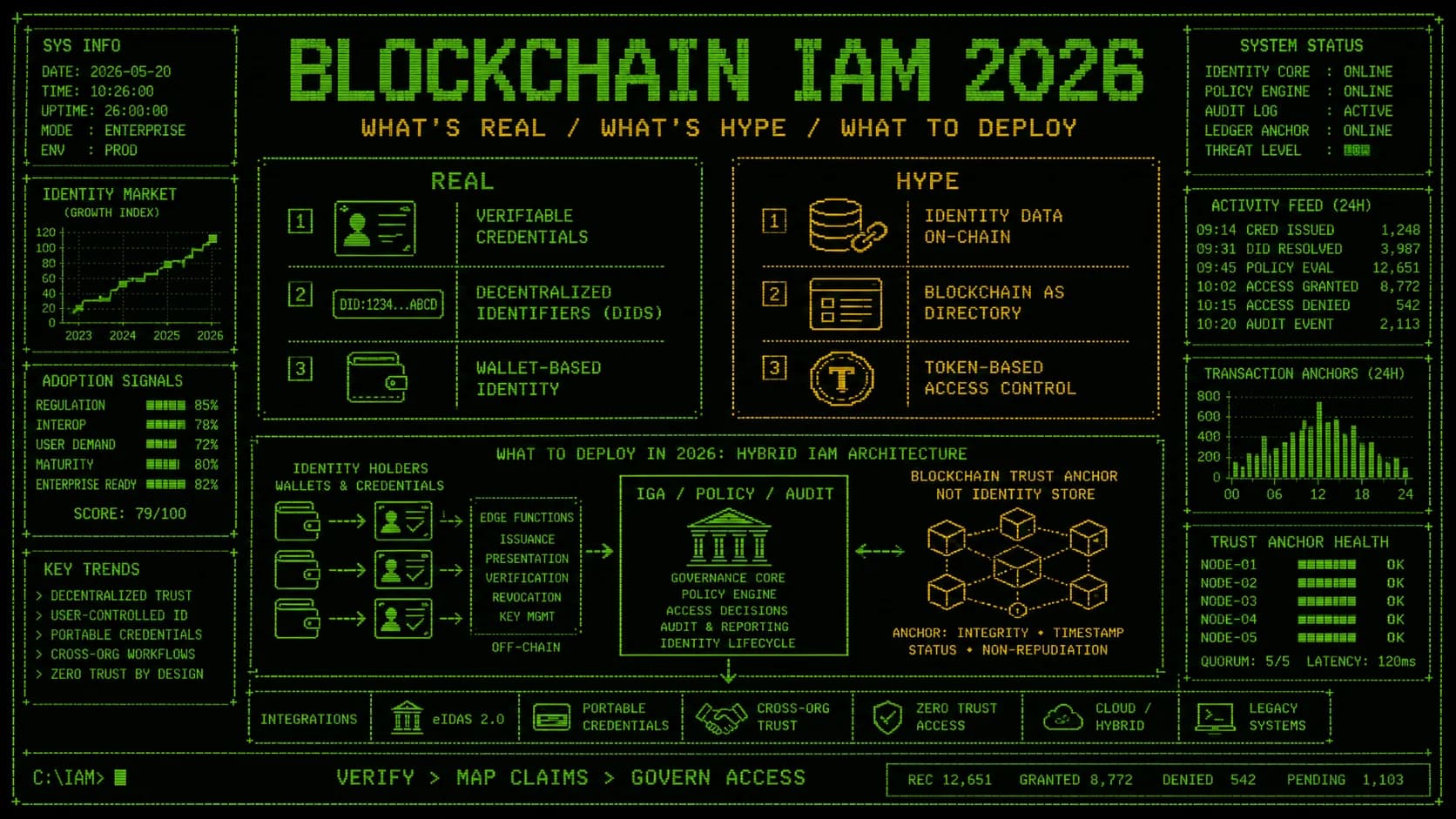
Blockchain-based IAM for enterprise 2026 reference — separating the decentralized identity patterns that work from the hype. Covers W3C Verifiable Credentials and Decentralized Identifiers (DIDs), wallet-based identity under the EU eIDAS 2.0 mandate, the three enterprise use cases with real traction (portable workforce credentials, reusable identity verification, cross-organization trust without federation agreements), the anti-patterns that failed (identity data on-chain, blockchain as a directory replacement, tokens as access control), and the hybrid architecture that connects decentralized credentials to centralized IGA lifecycle, certification, and audit accountability.
IAM & Identity Governance

Blockchain-Based IAM for the Enterprise: What's Real, What's Hype, and What to Deploy in 2026

A decade after the first blockchain identity white papers, the technology has sorted itself into two piles: a small set of patterns that genuinely work — verifiable credentials, decentralized identifiers, and wallet-based identity now backed by the EU's eIDAS 2.0 mandate — and a large pile of abandoned projects that tried to put identity itself on a chain. The 2026 enterprise reference on where blockchain-based IAM delivers (portable workforce credentials, reusable verification, cross-organization trust), where it never will (replacing your directory, lifecycle, or governance), and the architecture pattern that connects decentralized credentials to centralized accountability.

16 juli 2026Marcelo Victor
Read more
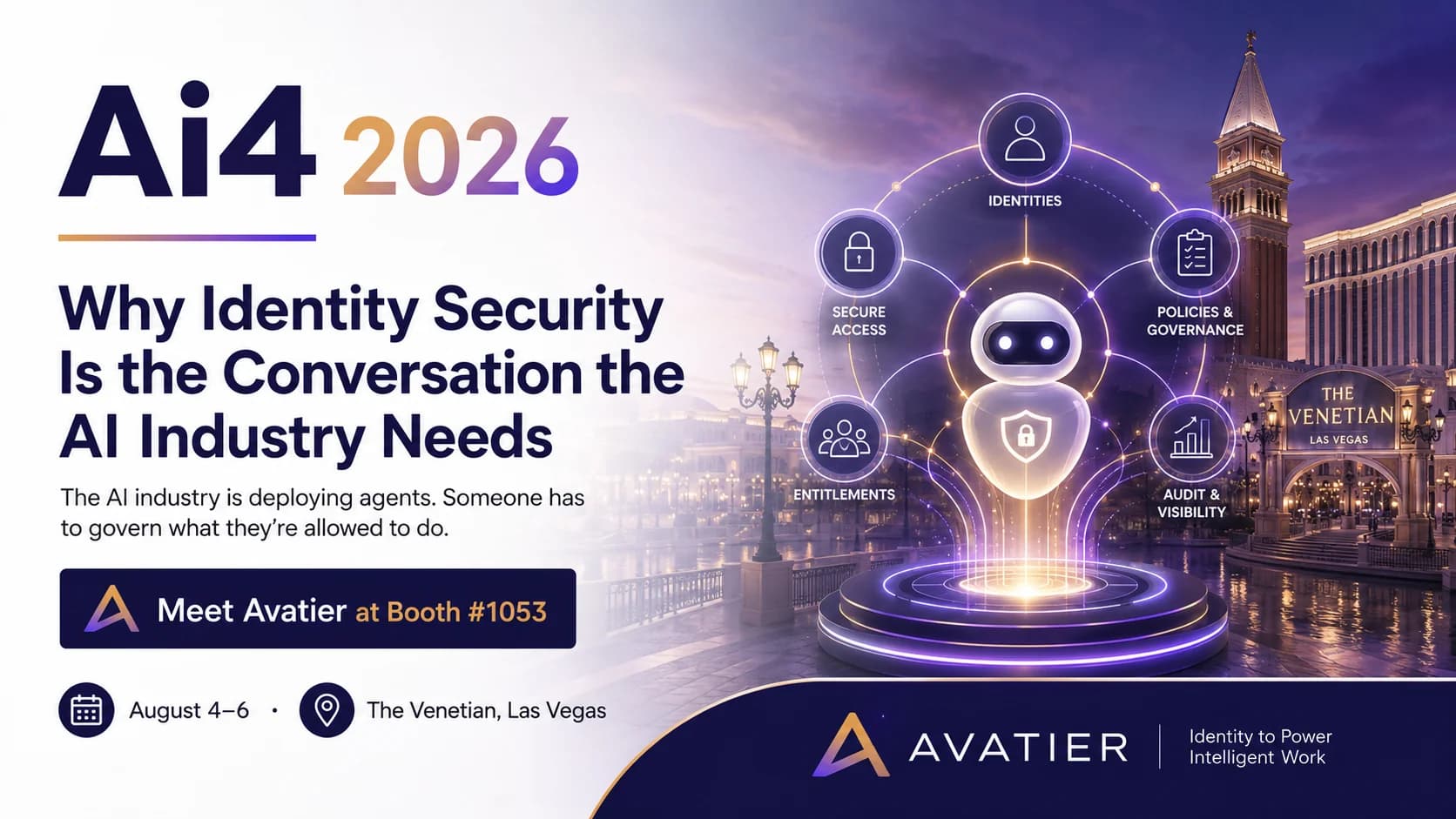
Avatier at Ai4 2026, Booth #1053 — identity security in the agentic AI era. August 4-6, 2026 at The Venetian, Las Vegas: why the AI industry's shift from models to autonomous agents makes identity governance the missing layer, the five identity questions to ask every AI vendor on the show floor, and what Avatier is bringing to America's largest AI conference — live demos, product announcements, and a point of view on why AI agents need the same joiner-mover-leaver lifecycle, least-privilege entitlements, certification campaigns, and threat detection long applied to human identities.
IAM & Identity Governance

Ai4 2026: Why Identity Security Is the Conversation the AI Industry Needs — Meet Avatier at Booth #1053

Ai4 2026 lands in Las Vegas August 4-6 with three full tracks on AI agents, a cybersecurity track, and an oversight track on AI governance and model risk. The agenda is telling you something: the enterprise AI conversation has shifted from what models can do to what agents are allowed to do — and that is an identity question. Avatier will be at Booth #1053 with live demos, product announcements, and a point of view on why every autonomous agent needs the same lifecycle, governance, and least-privilege discipline you apply to human identities.

16 juli 2026Nelson Cicchitto
Read more
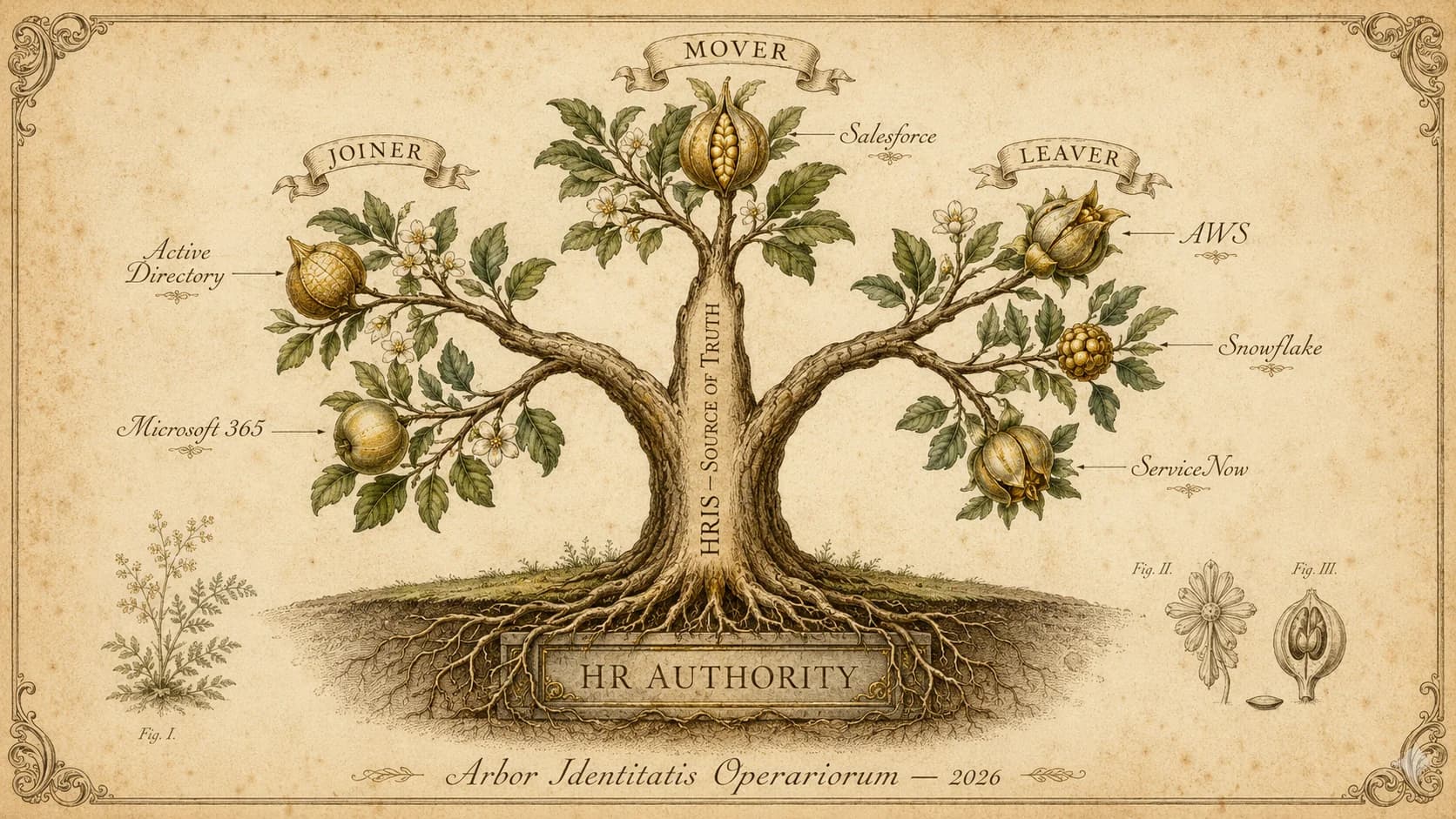
Access governance and user lifecycle management integration 2026 enterprise reference — the composed architecture where HRIS-driven joiner-mover-leaver events trigger access changes through IGA workflow, access certification campaigns reason against current lifecycle state rather than snapshot data, remediation workflow closes the loop through the lifecycle system, and the audit-ready posture that emerges when the two disciplines run as one continuous workflow rather than parallel silos, with specific integration patterns for SAP SuccessFactors and Workday HRIS platforms feeding SailPoint / Saviynt / Avatier IGA and downstream target systems.
IAM & Identity Governance

Integrating Access Governance with User Lifecycle Management: The 2026 Enterprise Reference

Access governance and user lifecycle management are two identity disciplines that only produce defensible IAM posture when they're integrated as one continuous workflow — HRIS-driven lifecycle events triggering access changes, certification campaigns reasoning against lifecycle state, and remediation workflow that closes the loop through lifecycle rather than parallel to it. The 2026 enterprise reference on the integration architecture, the failure modes when lifecycle and governance run as silos, and the operational discipline that produces audit-ready posture.

14 juli 2026Ekna Padmaraj
Read more
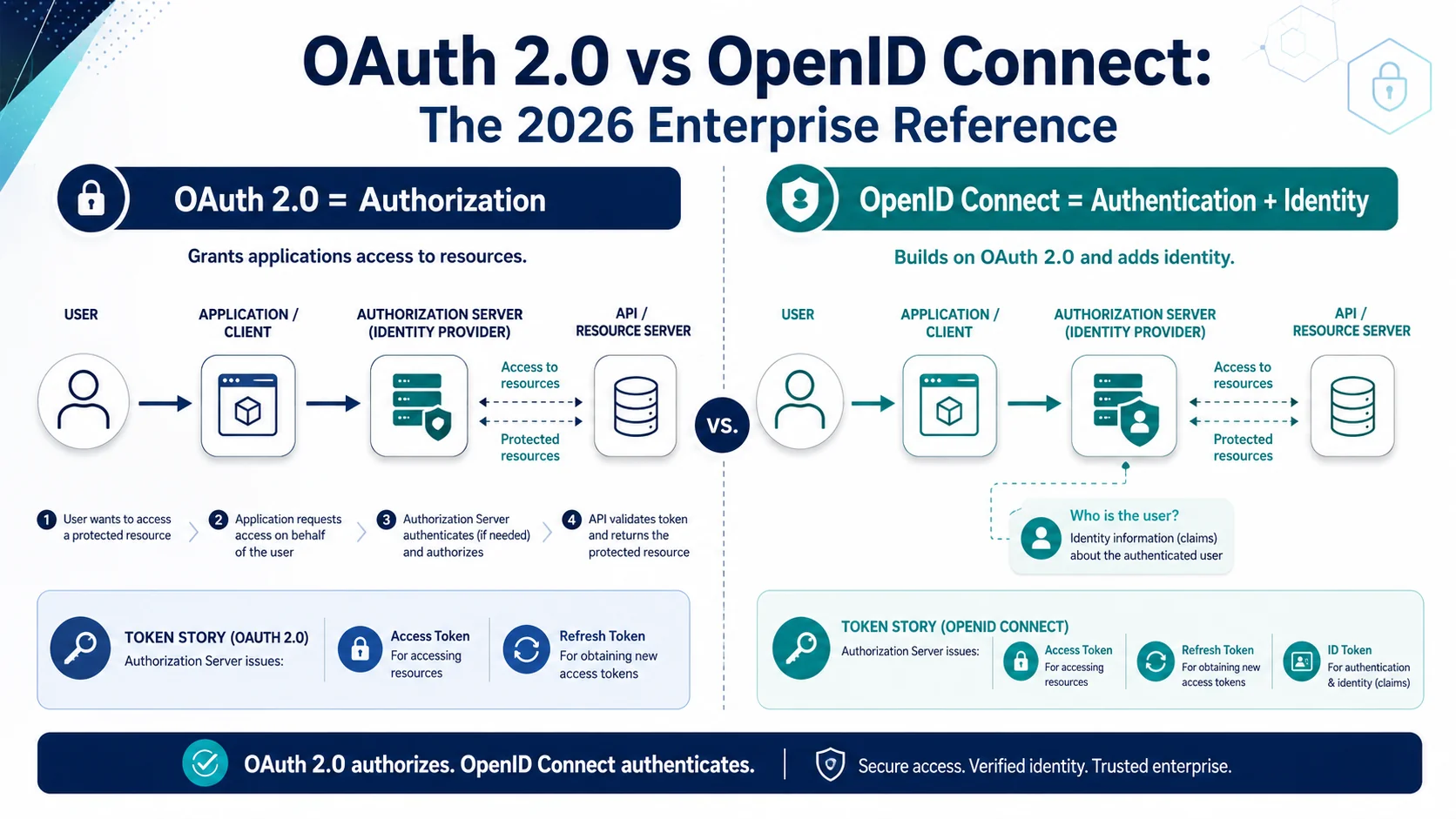
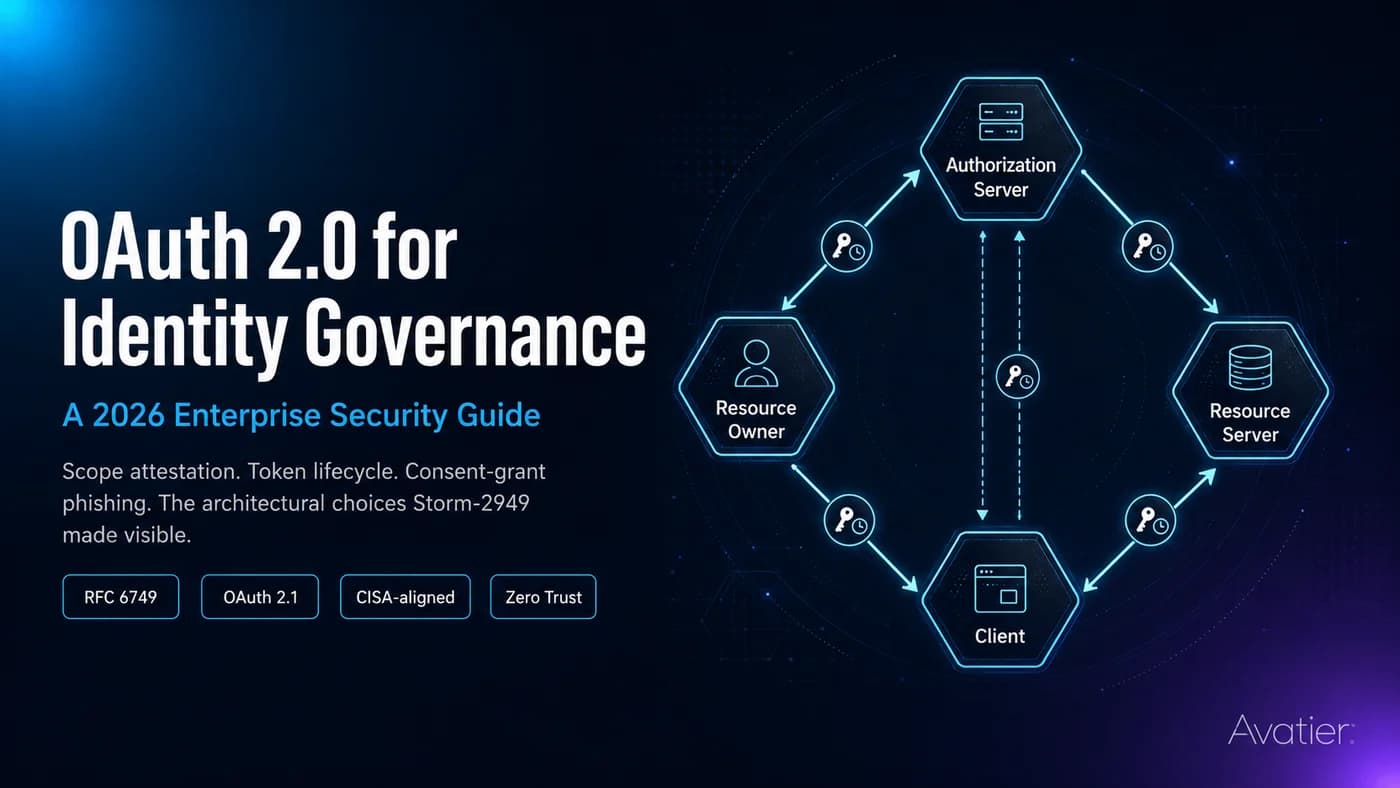
OAuth 2.0 vs OpenID Connect enterprise 2026 reference — the authorization framework vs the identity layer on top, the three token types (access, refresh, ID) and what each proves, the four enterprise use cases (workforce SSO, API delegation, third-party integrations, mobile app authentication), the common misuse patterns (using OAuth access tokens as identity proof, mixing authorization and authentication semantics), and the composition patterns that let both protocols do the job they're actually good at.
IAM & Identity Governance

OAuth 2.0 vs OpenID Connect: The 2026 Enterprise Reference

OAuth 2.0 and OpenID Connect are routinely confused in enterprise IAM conversations — they solve different problems and shouldn't be substituted for each other. The 2026 enterprise reference on what each actually does, the token types each issues, the four enterprise use cases and which protocol fits each, the common misuse patterns that produce security incidents, and the composition patterns that let both protocols do the job they're actually good at.

8 juli 2026Marcelo Victor
Read more
Multi-cloud identity management 2026 enterprise reference — the federation-first architecture that unifies AWS, Azure, GCP, and SaaS estate identity, the human-vs-workload identity split that determines architectural patterns, the four cloud-native IAM primitives (AWS IAM Identity Center, Azure AD, Google Cloud Identity, SaaS-native IdP integrations), the workload identity federation architecture that eliminates long-lived cloud credentials, the four anti-patterns that produce audit findings (per-cloud silos, root-account sprawl, static-credential accumulation, cross-cloud entitlement drift), and the operational pattern that composes coherently across the multi-cloud estate.
IAM & Identity Governance

Multi-Cloud Identity Management: The 2026 Enterprise Reference

Multi-cloud identity management is where every enterprise IAM program actually lives in 2026 — federated humans and workload identities spanning AWS, Azure, GCP, and the SaaS estate, with wildly different native IAM primitives per cloud. The 2026 enterprise reference on the federation-first architecture that keeps this coherent, the human-vs-workload identity split, the four multi-cloud anti-patterns that produce audit findings, and the operational pattern that scales without producing per-cloud identity silos.

8 juli 2026Ekna Padmaraj
Read more
Legacy IAM to modern IAM migration playbook 2026 — the 5-phase playbook (HRIS-driven lifecycle foundation, federation and SSO, phishing-resistant MFA, IGA workflow and certification, ISPM and ITDR risk layer), what legacy IAM actually means operationally (5 markers), the common migration failure modes, and the RACF/AS400 migration path for organizations still running mainframe-era access control.
IAM & Identity Governance

The Legacy IAM to Modern IAM Migration Playbook 2026

Most enterprises don't have modern IAM — they have some modern IAM layered on top of legacy IAM that never got retired. The 2026 enterprise reference on the 5-phase migration playbook that actually finishes the job: HRIS-driven lifecycle foundation, federation and SSO, phishing-resistant MFA, IGA workflow and certification, and the risk-evaluation layer above.

6 juli 2026Ekna Padmaraj
Read more
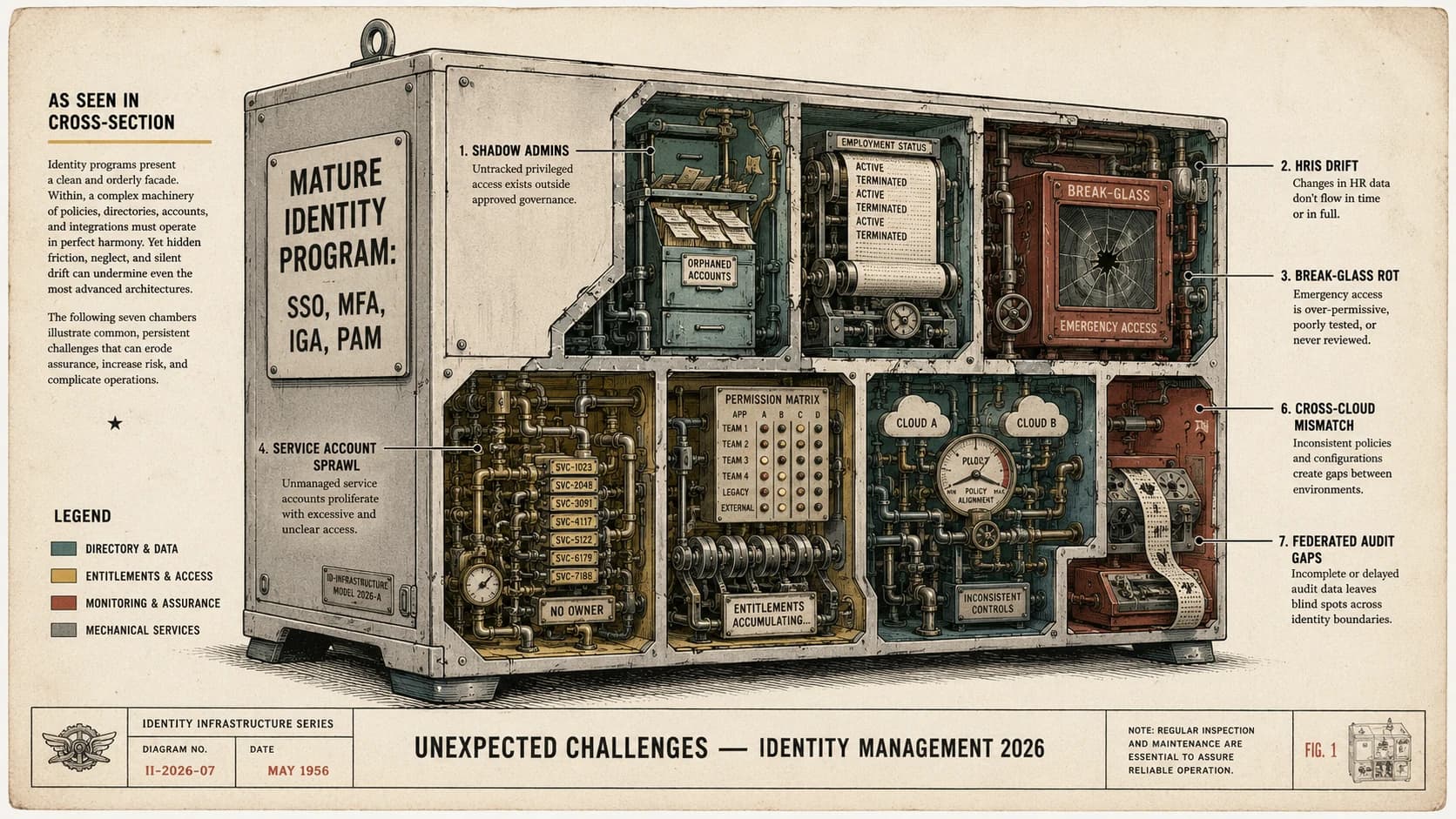
The unexpected challenges of identity management 2026 — the seven hidden failure modes that undermine mature enterprise identity programs after the obvious controls are deployed (SSO live, MFA enforced, IGA operational, PAM covering privileged accounts): shadow admins that inherit privilege through nested groups nobody audits, HRIS-drift orphan accounts where the identity system trusts a source of truth that has itself drifted, break-glass credential rot where the emergency-access accounts are rarely tested and quietly become the highest-value targets in the environment, service account sprawl where non-human identities outnumber human identities and receive almost no governance attention, permission drift over time where accumulated entitlements from role changes and project assignments are never pruned, cross-cloud entitlement mismatch where the same user has fundamentally different permission profiles across AWS/Azure/GCP because no unified CIEM layer normalizes them, and federated audit-trail gaps where the authentication events split across identity providers and never reconstruct end-to-end. Diagnostic patterns and remediation architecture for each.
IAM & Identity Governance

The Unexpected Challenges of Identity Management 2026: Seven Hidden Failure Modes Every Program Underestimates

Every mature identity program clears the obvious hurdles — SSO is live, MFA is enforced, IGA is deployed, PAM covers privileged accounts. And every mature identity program still gets breached through a set of hidden failure modes that don't appear on the architecture diagram. The 2026 enterprise reference on the seven challenges that undermine identity programs after the obvious problems are solved — shadow admins, HRIS-drift orphans, break-glass credential rot, service account sprawl, permission drift over time, cross-cloud entitlement mismatch, and federated audit-trail gaps.

1 juli 2026Marcelo Victor
Read more
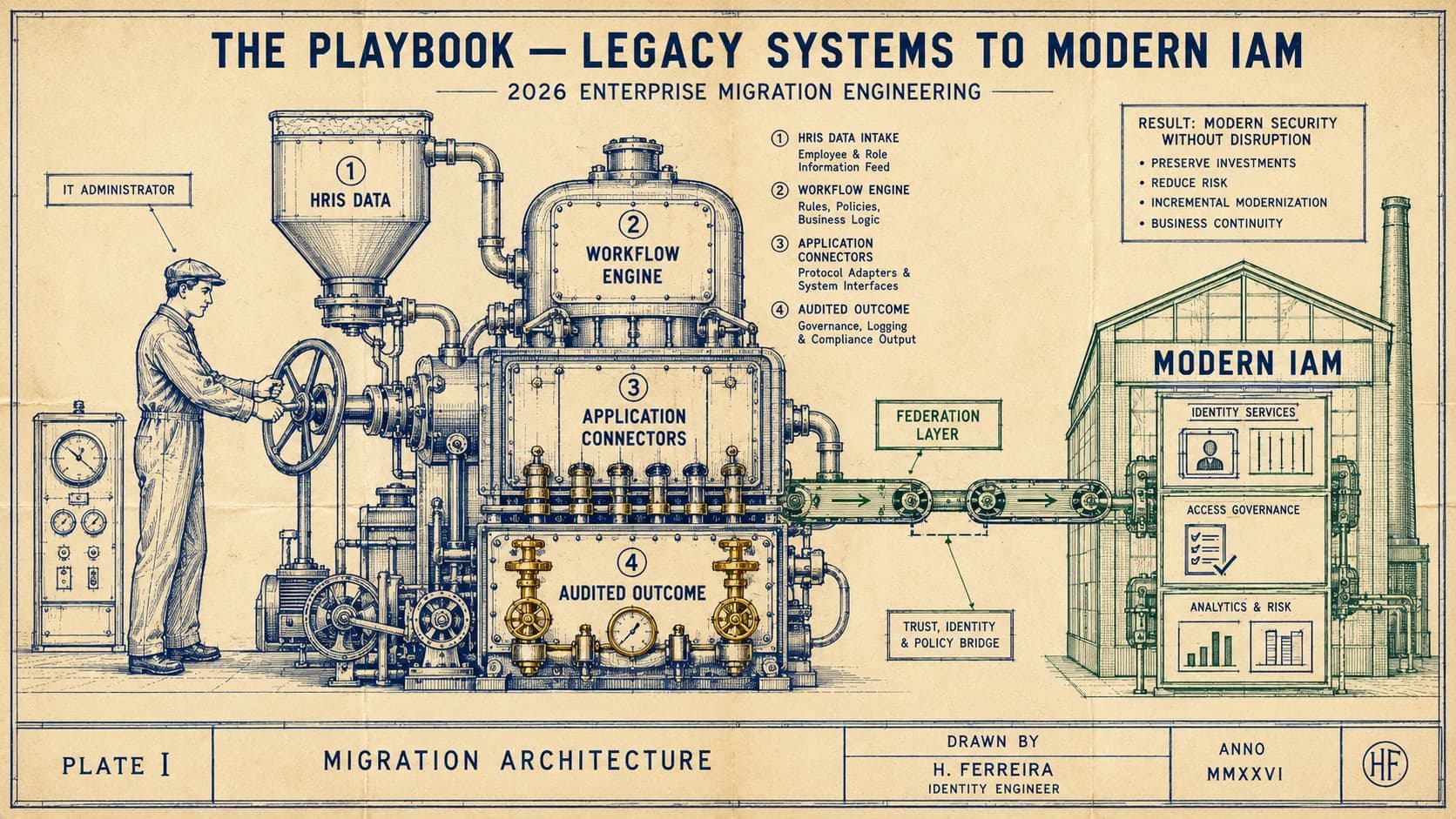
Playbook moving legacy systems to modern IAM 2026 — the legacy IAM landscape still in production (Sun IDM, Oracle Identity Manager, NetIQ, on-prem AD, mainframe security managers), the five-phase migration playbook (inventory and dependency mapping, federation-based parallel-running, lifecycle workflow port, application connector cutover, legacy decommission), the risk patterns that derail legacy IAM migrations, and the architectural patterns that succeed in production.
IAM & Identity Governance

The Playbook: Moving Legacy Systems to Modern IAM 2026

Most enterprises still run a meaningful share of business-critical workloads on identity infrastructure from a previous era — Sun Identity Manager, Oracle Identity Manager, NetIQ, on-prem AD with manual provisioning, ACF2 / RACF / Top Secret on the mainframe. The 2026 enterprise playbook for moving them to modern IAM without breaking the workloads they secure.

30 juni 2026Henrique Ferreira
Read more
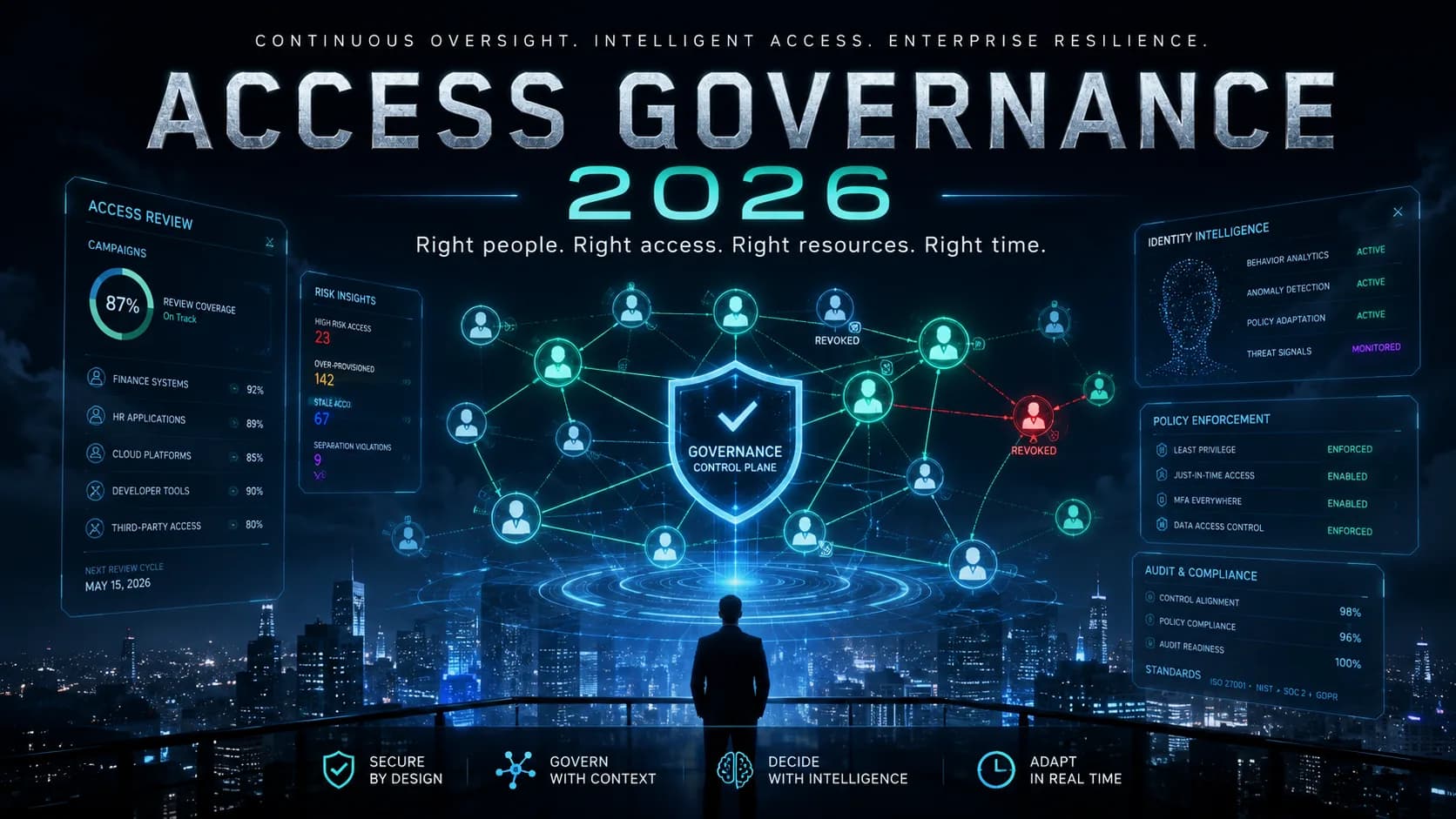
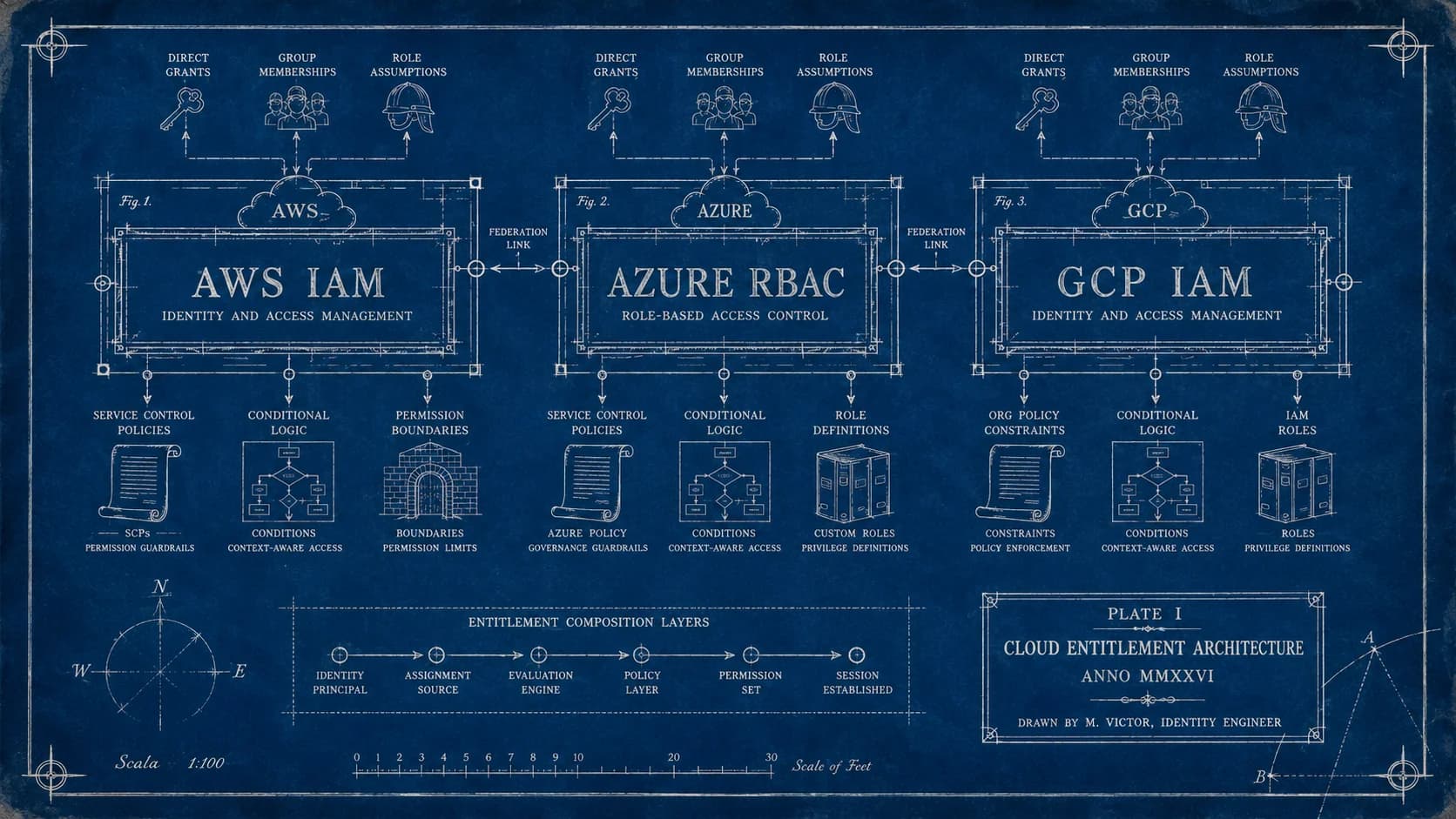
CIEM cloud infrastructure entitlement management 2026 — the analyst category that handles cloud-specific entitlement complexity (AWS IAM, Azure RBAC, GCP IAM), the four CIEM evaluation domains (effective-permission visibility, least-privilege baselining, machine-identity governance, multi-cloud federation), the mid-2026 vendor landscape (Wiz, Microsoft Entra Permissions Management, Permiso, Sonrai, Saviynt, Authomize, Tenable Cloud Security), the architectural composition with IGA + PAM + ISPM, and the operational reality of governing cloud entitlements at the scale that traditional IGA platforms weren't built for.
IAM & Identity Governance

CIEM: Cloud Infrastructure Entitlement Management for Enterprise 2026

Traditional IGA was built for workforce identity in defined business systems. Cloud infrastructure is a different problem — thousands of permissions per cloud account, machine-identity dominance, inheritance through nested groups and policies, scale that no human reviewer can certify manually. CIEM is the emerging analyst category that handles this complexity. The 2026 enterprise reference on the four CIEM domains, the vendor landscape, and the architectural composition with IGA, PAM, and ISPM.

29 juni 2026Marcelo Victor
Read more
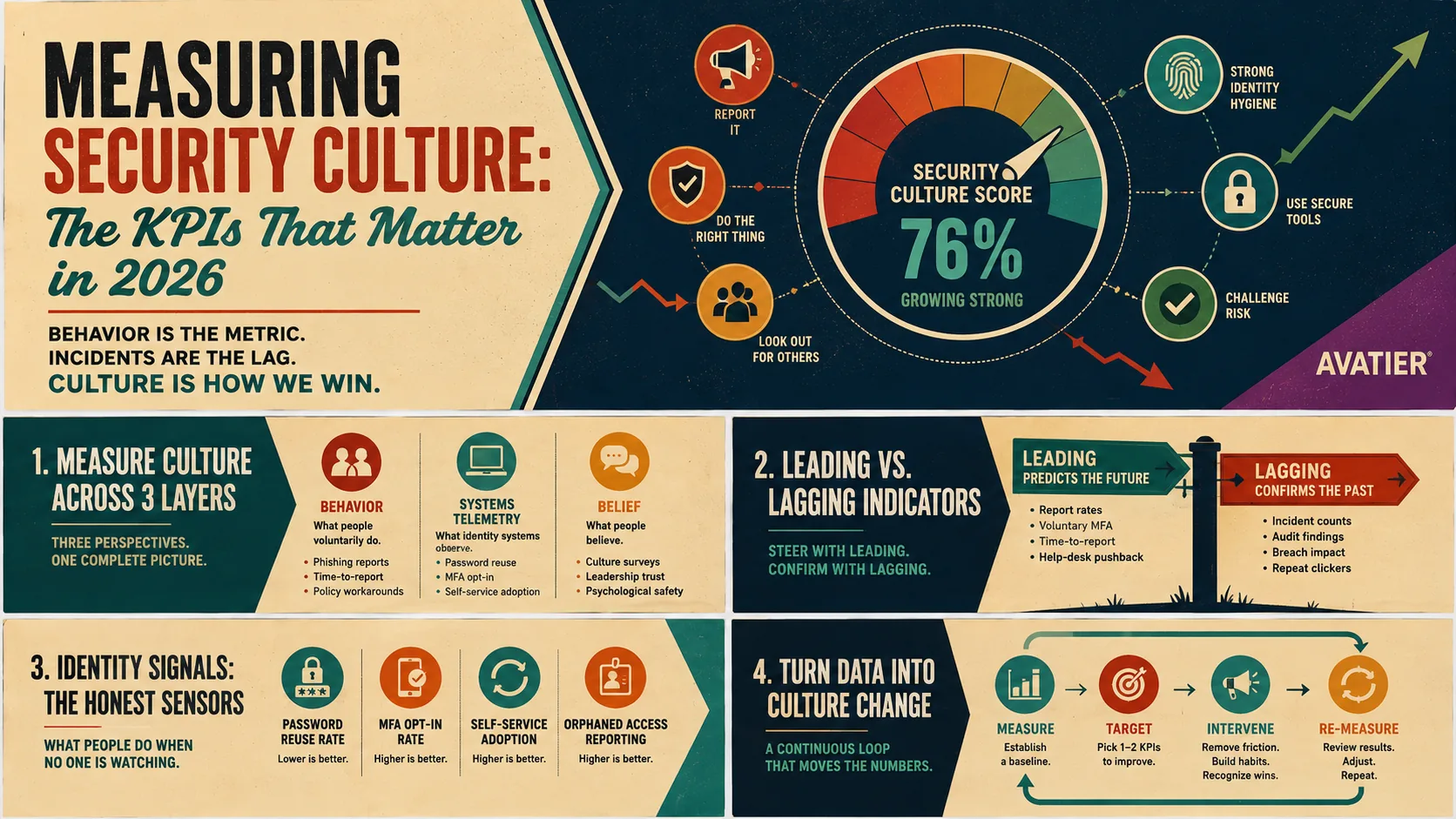
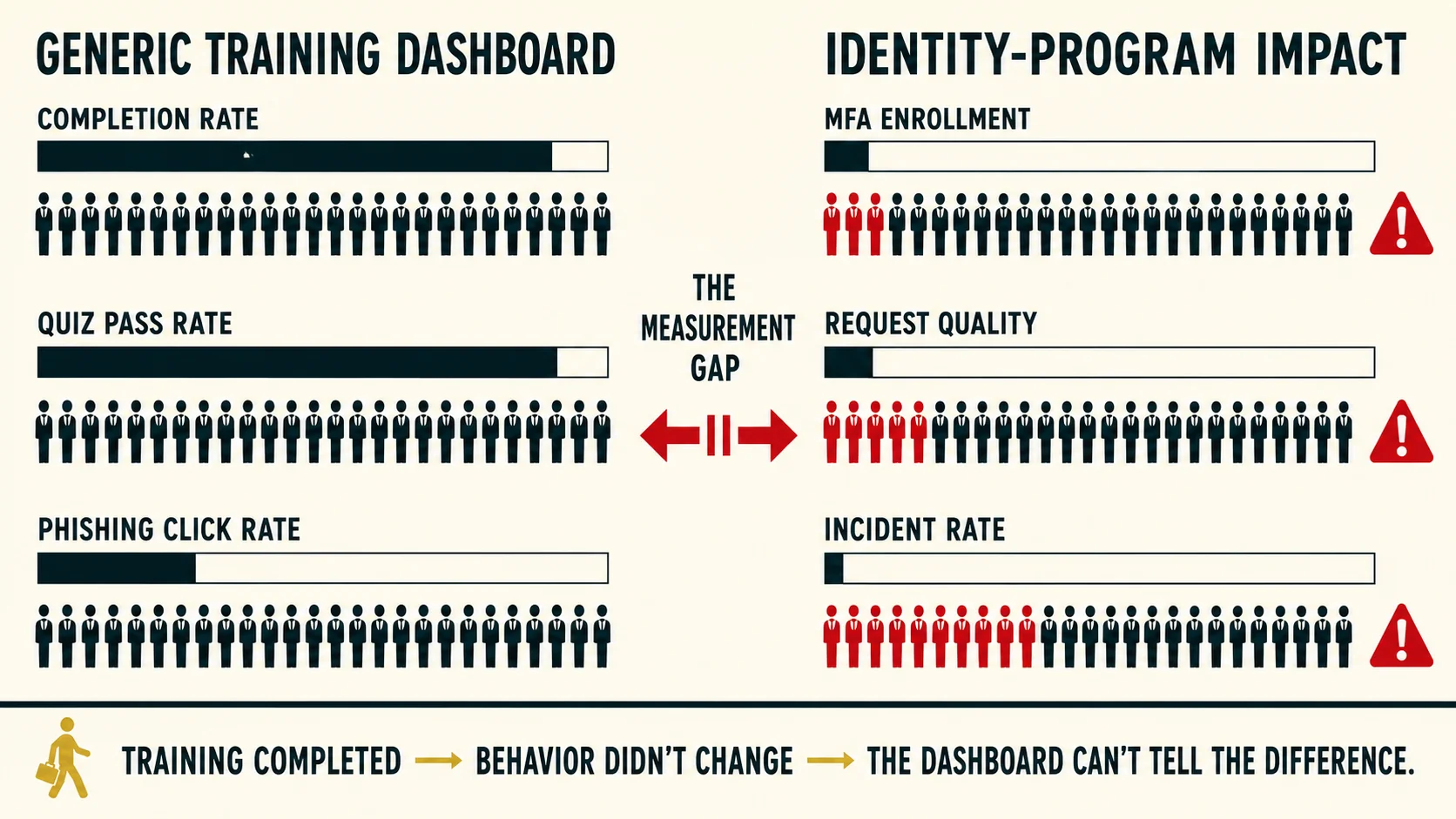
Security awareness training KPIs for identity programs 2026 — the five identity-specific KPI categories that matter (phishing simulation performance with identity-system context, MFA adoption and friction metrics, credential hygiene behaviors, access request patterns, identity-incident impact), the telemetry integration between training platforms and IAM that makes the metrics measurable, the architecture that catches training-to-behavior correlations, and the operational pitfalls (vanity metrics, attestation fatigue, training-without-identity-context) that produce dashboards full of green numbers and unchanged risk.
IAM & Identity Governance

Security Awareness Training KPIs for Identity Programs 2026

Most security awareness training dashboards measure participation and quiz scores. Identity programs need to measure something different — whether the training actually changed the credential-handling, MFA-adoption, and access-request behaviors that determine the identity-attack surface. The 2026 enterprise reference on the five identity-specific KPI categories, the telemetry integration that makes them measurable, and where most training measurement programs break.

25 juni 2026Garrett Garitano
Read more

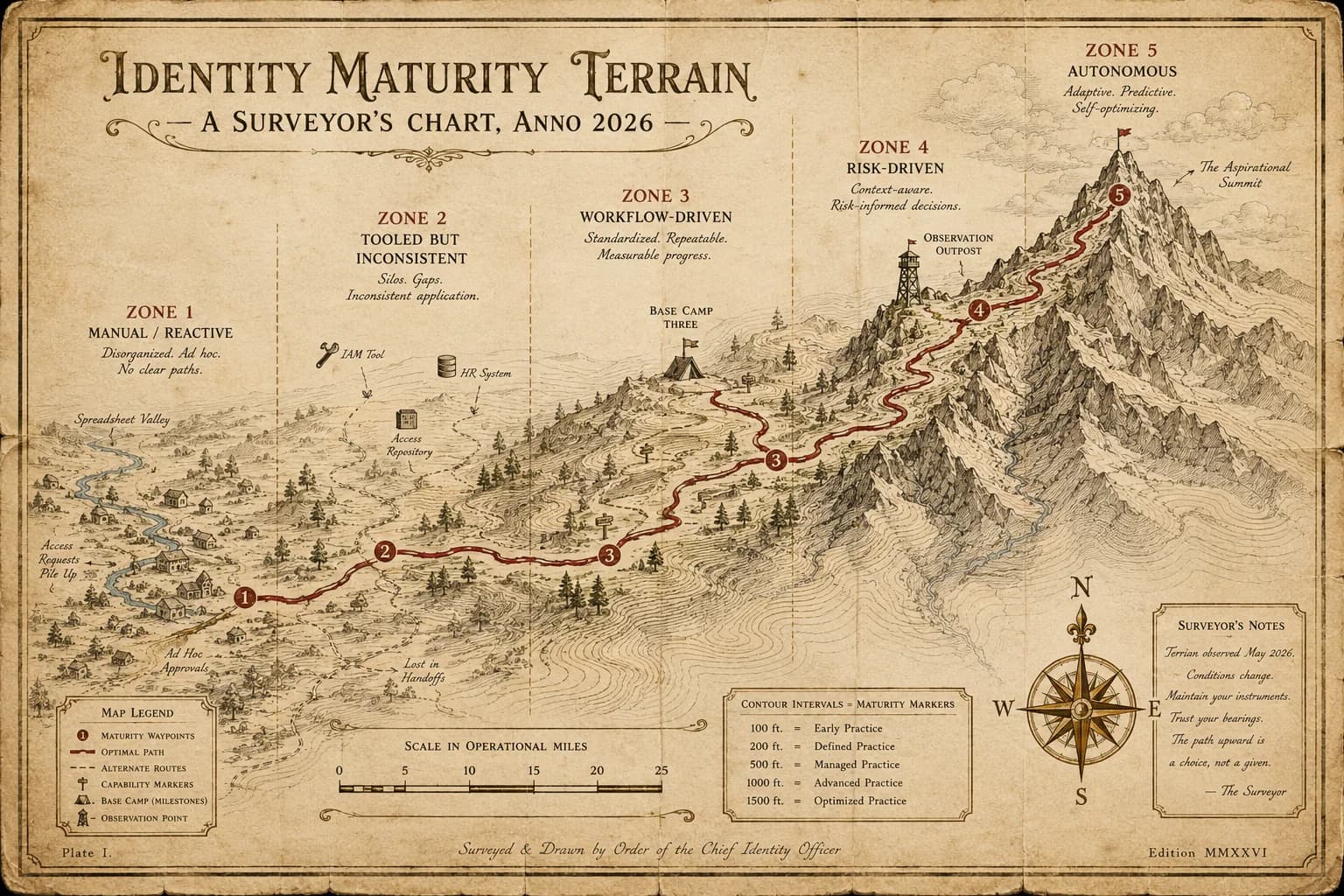
Why your IGA project failed and how to recover 2026 — the four failure patterns that produce stalled IGA deployments (connector backlog with uncovered target systems, workflow complexity that nobody can complete, catalog drift between IGA and reality, stakeholder fatigue with managers no longer engaging), the decision framework for restart vs continue, the four-phase recovery path that doesn't require rip-and-replace, and the Stage 2 to Stage 3 transition in the broader identity maturity model that successful recoveries are usually executing.
IAM & Identity Governance

Why Your IGA Project Failed — And How to Recover Without Starting Over 2026

60% of IGA deployments stall. The platform is in production, the consultants left, the certification campaigns happen on paper but produce nothing actionable, and leadership wants to know why the program isn't delivering. The 2026 enterprise reference on the four failure patterns that produce stalled IGA, when to restart vs continue, and what a phased recovery actually looks like.

25 juni 2026Henrique Ferreira
Read more
Shadow IT provisioning ticket-driven access risk 2026 — the five informal provisioning paths that bypass IGA (Slack DM requests, ServiceNow tickets routed to direct grant, manager Excel re-uploads, tool-side admin self-service, vendor SaaS self-provisioning), the architectural pattern that captures these without disrupting operational flow (target-system reconciliation, ticket integration, governed self-service portal), and the audit risk that grows in proportion to ungoverned provisioning volume.
IAM & Identity Governance

Shadow IT Provisioning: The Access Risk Living in Your Ticketing System 2026

Most enterprise access doesn't flow through the IGA platform — it flows through Slack DMs, ServiceNow tickets routed to direct grant, manager spreadsheets, tool-side admin self-service, and vendor SaaS self-provisioning. The 2026 enterprise reference on shadow IT provisioning, why it bypasses even mature IGA programs, and the architectural pattern that captures it without breaking the operational flow.

24 juni 2026Marcelo Victor
Read more
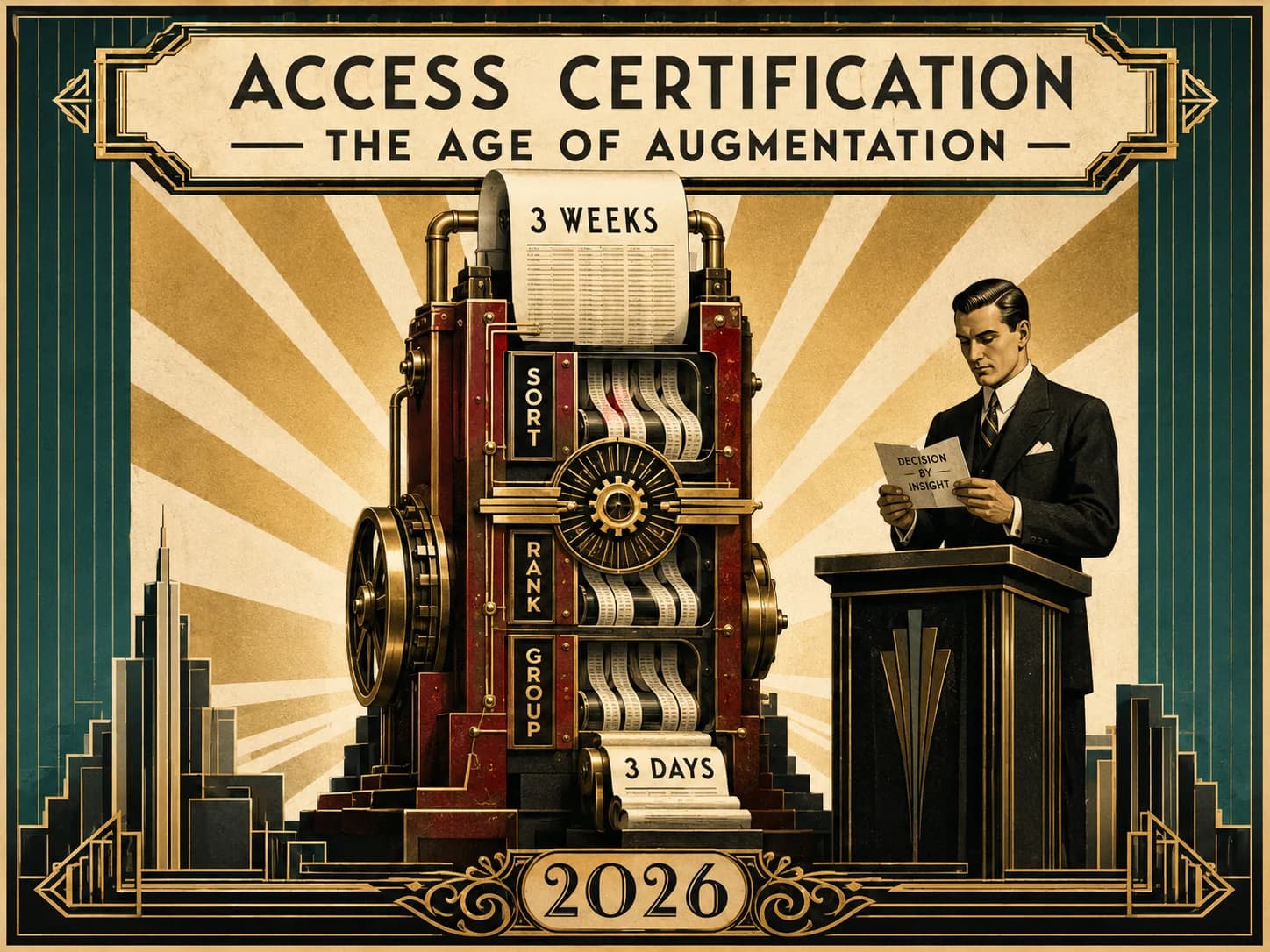
AI-augmented access certification campaigns 2026 — the four things AI actually does in certification (risk stratification, anomaly surfacing, behavioral attestation, bulk decision grouping), the architecture that lets AI add value rather than noise, the time-savings reality (3 weeks compressed to 3 days at the median), and the operational pitfalls that produce attestation fatigue when AI recommendations are deployed without discipline.
IAM & Identity Governance

AI-Augmented Access Certification: Cutting Campaigns from 3 Weeks to 3 Days 2026

Quarterly access certification campaigns are the operational backbone of IGA — and the place where certification fatigue does the most damage. The 2026 enterprise reference on what AI actually automates in certification (not the vendor-marketing version), where the time savings come from operationally, and where AI-augmented certification breaks if you skip the architectural discipline.

24 juni 2026Ekna Padmaraj
Read more
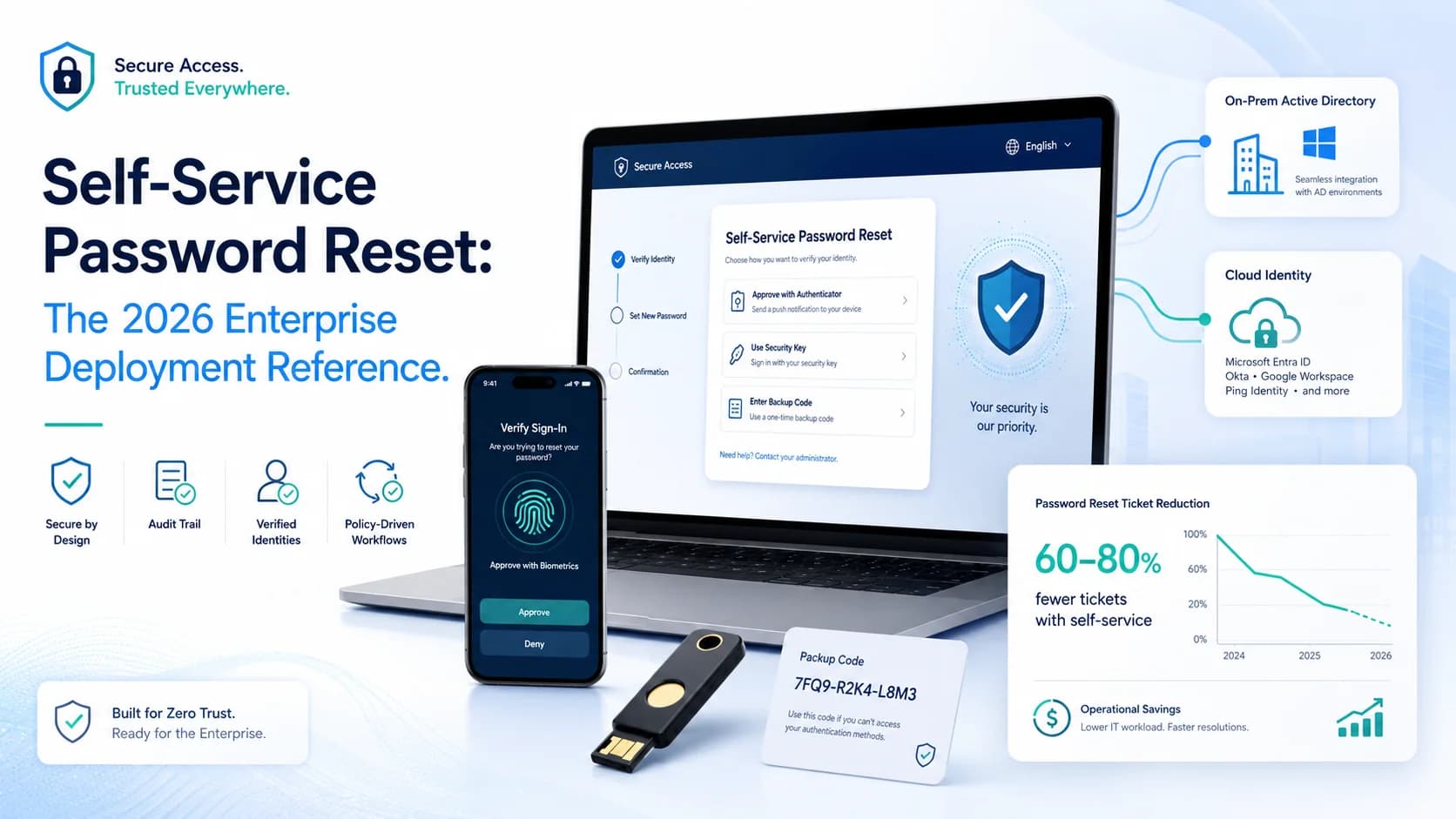
Service Account Governance and Non-Human Identity for enterprise 2026 — covering the NHI category (service accounts, workload identities, API credentials, automation agents, AI agent identities), the governance gaps where credentials live in config files and orphaned scripts, the workload identity federation patterns (Kubernetes service tokens, AWS IAM roles, Azure managed identities), and the architecture that brings NHI under the same lifecycle discipline as human identities.
IAM & Identity Governance

Service Account Governance and Non-Human Identity for Enterprise 2026

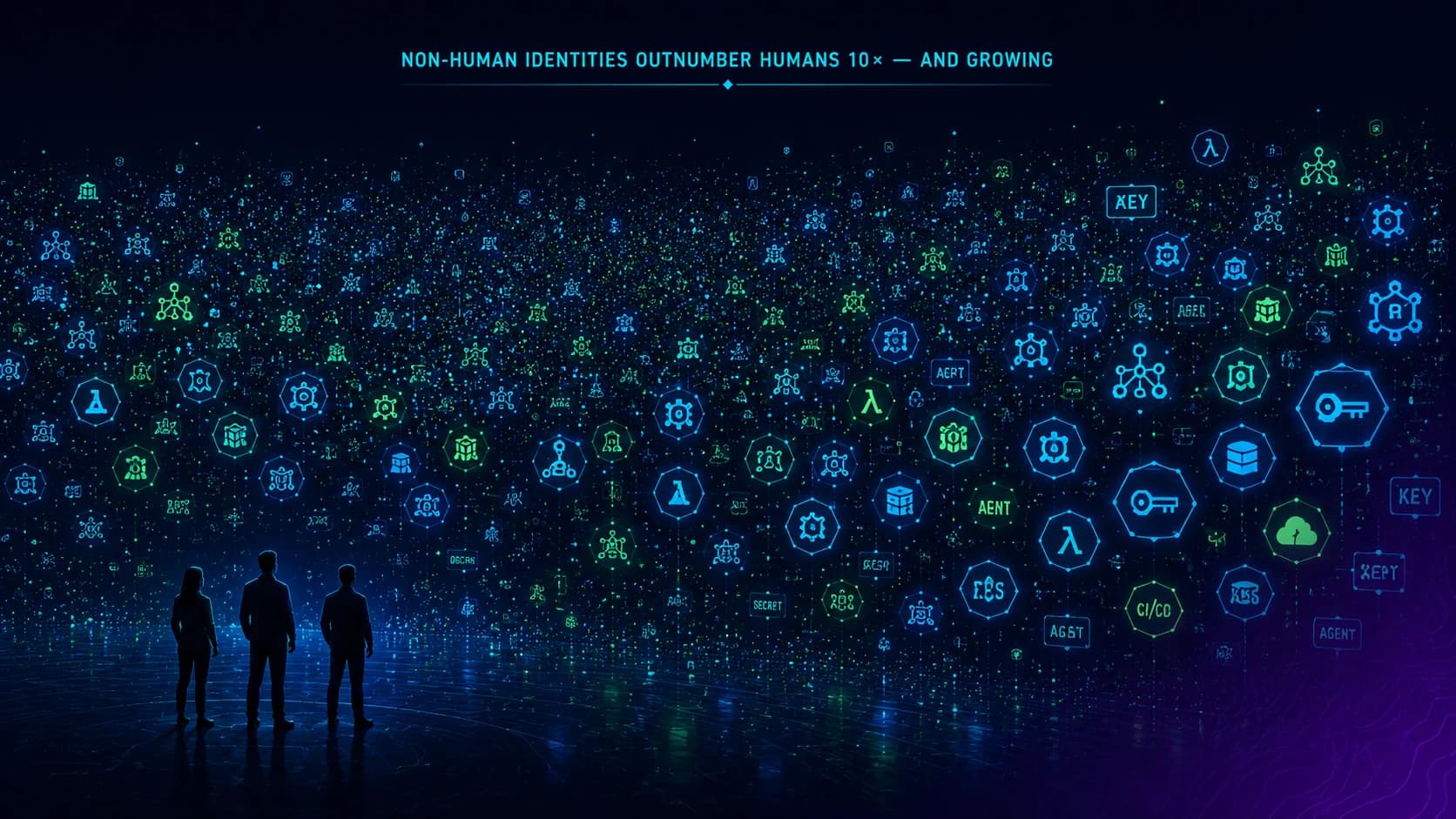
Non-human identities — service accounts, workload identities, API credentials, automation agents, and the rapidly growing population of AI agent identities — now outnumber human identities in most 2026 enterprises by 10× or more. The reference on what NHI is, where the governance gaps are, and the architecture that brings non-human credentials under the same lifecycle discipline as humans.

16 juni 2026Marcelo Victor
Read more
Savings Calculator

Password Reset Cost Calculator

Enter your company size and see how much your help desk spends on password resets — and how much Avatier Credential Governance saves.
Horizon
Total Resets per Year
18,000
Annual Cost Without Automation
$500,000

Avatier Credential Governance reduces your cost by

$350,000

Over 1 year

See the full methodology and sources →