Self-Service Password Reset: The 2026 Enterprise Deployment Reference
Self-service password reset (SSPR) is the operational lever that moves enterprise password reset economics from $70-per-ticket help-desk-only to 60-80% ticket-volume reduction — when deployed with modern authenticator-based verification, coverage across the domain workstation and frontline segment cases, and audit-trail integration that satisfies SOX / PCI-DSS / HIPAA. The 2026 enterprise reference on SSPR deployment architecture, the five configuration elements that determine effectiveness, and the vendor-neutral comparison discipline for SSPR selection.
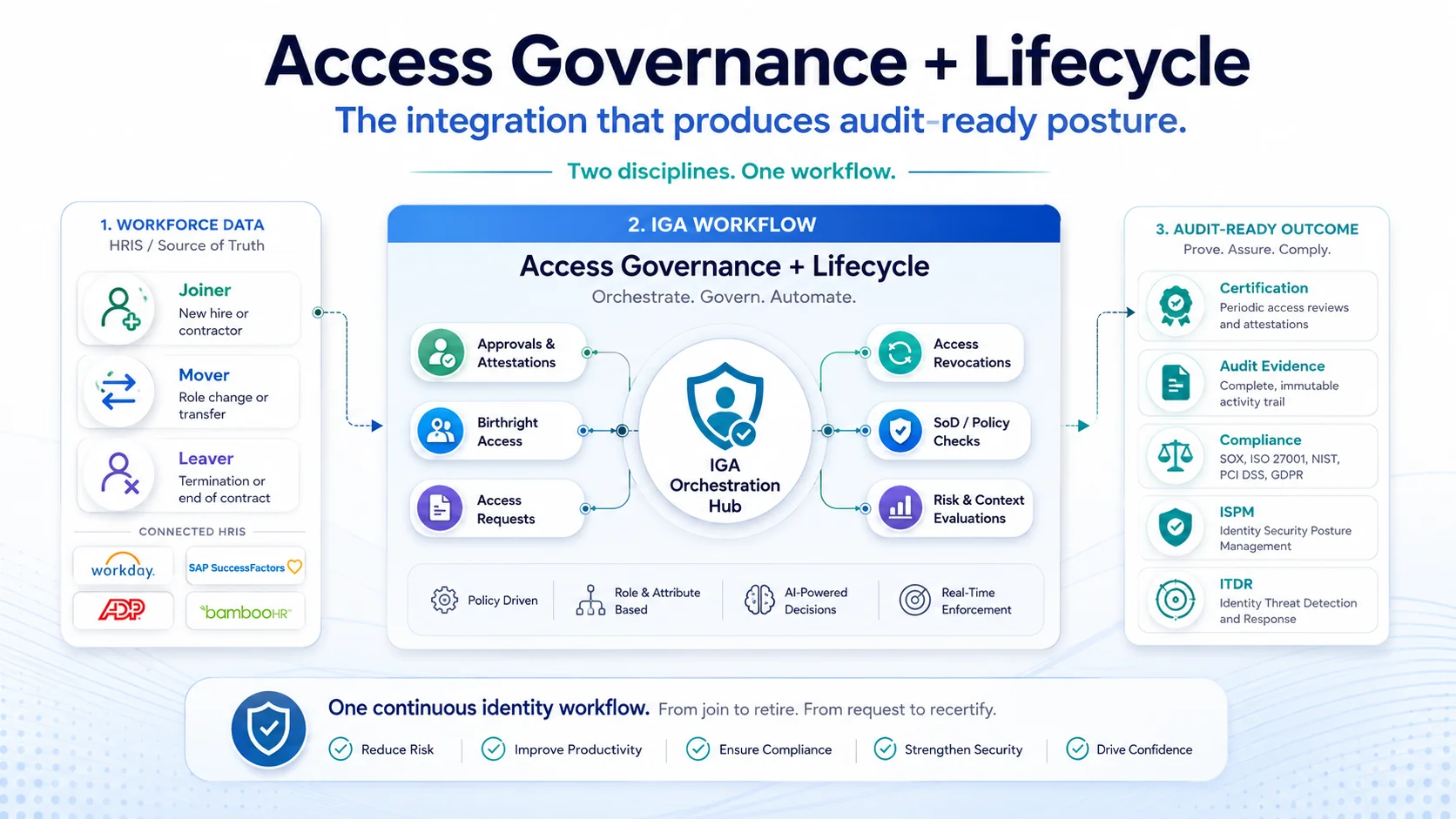
Self-service password reset (SSPR) is the operational lever that moves enterprise password reset economics from $70-per-ticket help-desk-only to 60-80% ticket-volume reduction — when deployed with modern authenticator-based verification, coverage across the domain workstation and frontline segment cases, and audit-trail integration that satisfies SOX / PCI-DSS / HIPAA. The 2026 enterprise reference on SSPR deployment architecture, the five configuration elements that determine effectiveness, and the vendor-neutral comparison discipline for SSPR selection.
- Self-service password reset (SSPR) is the operational lever that moves enterprise reset economics. Well-configured SSPR reduces password reset ticket volume 60-80% versus help-desk-only reset — worth $105k-$500k annually for typical enterprise deployments at the $70-per-ticket Gartner benchmark. Poorly-configured SSPR reduces volume but produces new security surface that fails compliance audit.
- Five configuration elements determine SSPR effectiveness. Strong authenticator-based verification (mobile biometric, hardware FIDO2, out-of-band token) — NOT knowledge-based questions (NIST 800-63B Rev. 4 explicitly downgraded knowledge-based verification). Domain workstation pre-login coverage for the 'forgot password, can't reach portal' case. Frontline segment coverage for smartphone-unavailable workforce segments. Audit-trail integration that satisfies SOX / PCI-DSS / HIPAA / NIST framework reporting. Rate-limiting and abuse detection at the reset workflow layer.
- The vendor-neutral SSPR comparison discipline evaluates against a specific capability set. Deployment architecture (portal-only vs portal + pre-login vs portal + pre-login + deviceless). Authenticator support (mobile biometric via out-of-band push, hardware FIDO2, deviceless FIDO2, legacy TOTP, legacy SMS as fallback only). Compliance framework alignment (SOX / PCI-DSS / HIPAA / NIST 800-63B). Audit trail integration and reporting capabilities. Scaling characteristics under enterprise workforce volume.
- The SSPR compliance surface is specific. SOX §404 audit reviewers examine reset workflow evidence for financial reporting system access. PCI-DSS v4.0.1 Requirement 8.3 specifies strong authentication for reset flows on card-data systems. HIPAA §164.312 requires documented verification for ePHI-access reset. NIST 800-63B Rev. 4 explicitly downgraded knowledge-based verification and requires authenticator-based verification at AAL2 and above. Deployments that use knowledge-based verification fail all four framework audits at meaningful scope.
- The 2026 direction is passwordless workforce authentication that eliminates SSPR volume structurally. Platform passkeys + biometric on managed devices. Windows Hello for Business on Windows workstations. Hardware FIDO2 keys for step-up on privileged workflows. Deviceless FIDO2 via Identity Challenge Card for smartphone-unavailable segments. As passwordless coverage expands, the reset problem shrinks — SSPR remains as fallback for the residual password-dependent systems while primary workforce authentication moves off passwords entirely.
Self-service password reset (SSPR) is the operational lever that moves enterprise password reset economics from $70-per-ticket help-desk-only to 60-80% ticket-volume reduction. For a 5,000-employee enterprise, that's $105k-$500k in annual savings — real budget that funds SSPR deployment and produces ongoing operational lift. The catch is that poorly-configured SSPR reduces ticket volume but produces new security surface. The workflow itself is an attack surface; the verification factor is where credential-class quality flows through to actual security posture; the audit trail is what makes the SSPR deployment defensible under SOX / PCI-DSS / HIPAA / NIST audit.
This piece is the 2026 enterprise reference on SSPR deployment. The architecture and operational lever, the five configuration elements that determine effectiveness, the vendor-neutral comparison discipline for SSPR selection, the compliance requirements that shape defensible deployment, and the deployment discipline that produces the 60-80% ticket-volume reduction without introducing new audit findings. Companion pieces cover adjacent layers — the Password Reset Comprehensive Guide piece covers the four workflow architectures overall; the Active Directory Login Reset piece covers the AD pre-login case specifically; the OTP Failure Case Scenarios piece on ICC covers why knowledge-based verification and SMS-OTP fall short as SSPR authentication factors.
The SSPR operational lever
Help-desk-assisted password reset carries $70 per ticket (Gartner benchmark). Enterprise reset volume runs 20-50% of workforce annually depending on password policy complexity, credential silo count, workforce turnover, and lack of SSPR coverage. A 5,000-employee enterprise at 30% annual volume produces 1,500 reset tickets annually at $70 = $105k just in help desk labor, plus $30k+ in workforce productivity loss.
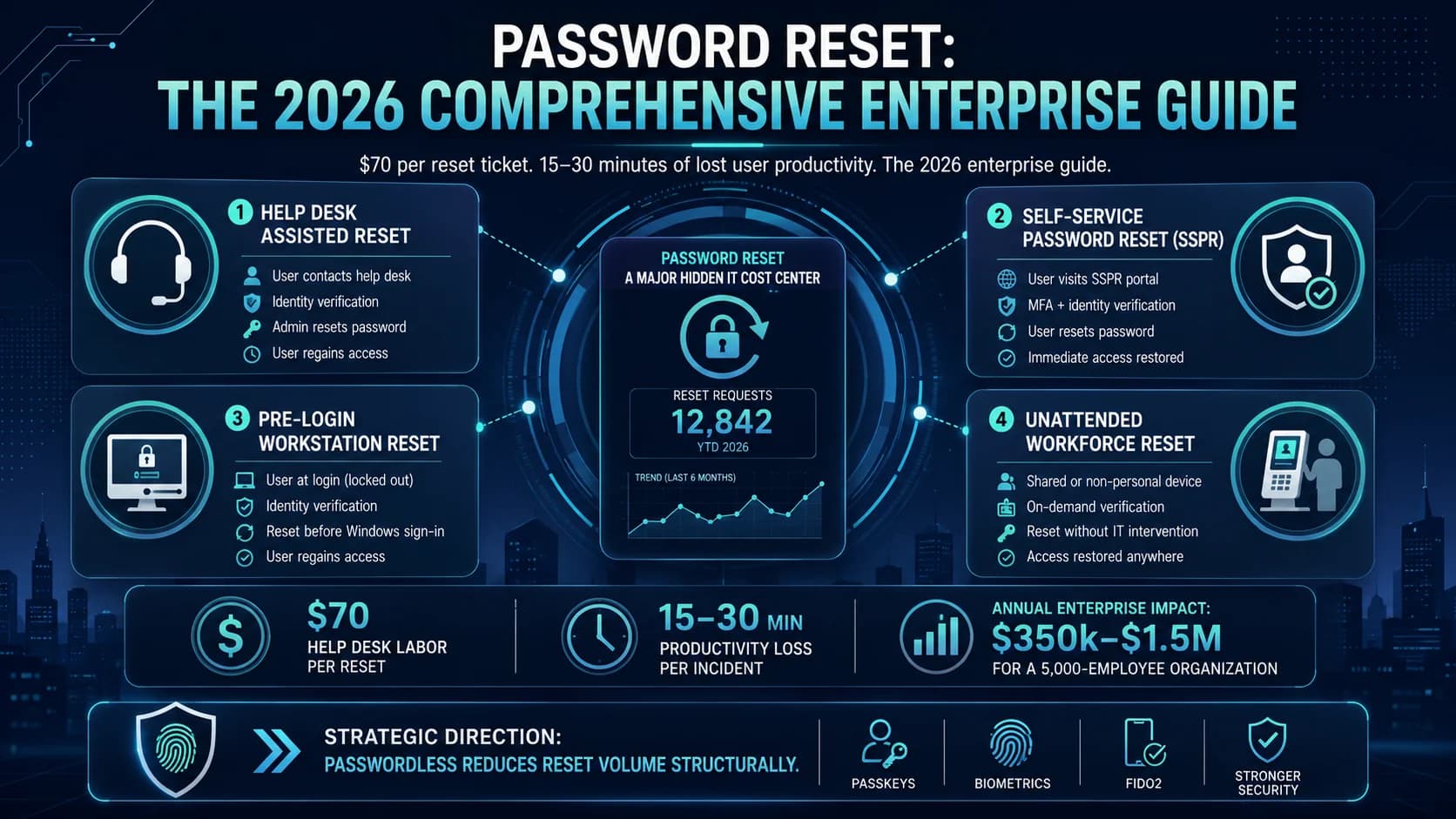
Well-configured SSPR reduces this cost 60-80%. The user completes the workflow independently at a self-service portal; no help desk involvement; no per-ticket labor cost. The residual ~20-40% of reset events flow through help desk assisted reset (for privileged and high-assurance cases) or through the pre-login and deviceless paths (Password Reset Comprehensive Guide piece covers the four architectures).
The operational lift. 900-1,200 SSPR-eligible resets annually for the 5,000-employee example × $70 = $63k-$84k in help desk labor savings, plus proportional workforce productivity savings ($22k-$30k), plus opportunity cost of help desk labor freed up for higher-value work.
The scaling pattern. Larger enterprises see proportional scaling. A 15,000-employee enterprise with the same volume characteristics sees $300k-$500k annual SSPR savings. Enterprises with higher reset volume (financial services with complex password policies, healthcare with credential silos, retail with seasonal workforce) see larger absolute savings.
Where the savings compound. The Hidden Costs of Identity Management piece covers help desk savings as one of five hidden cost categories that compose enterprise IAM ROI. The Digital Identity Costs and ROI piece covers help desk savings as one of four ROI categories that compose the enterprise IAM business case.
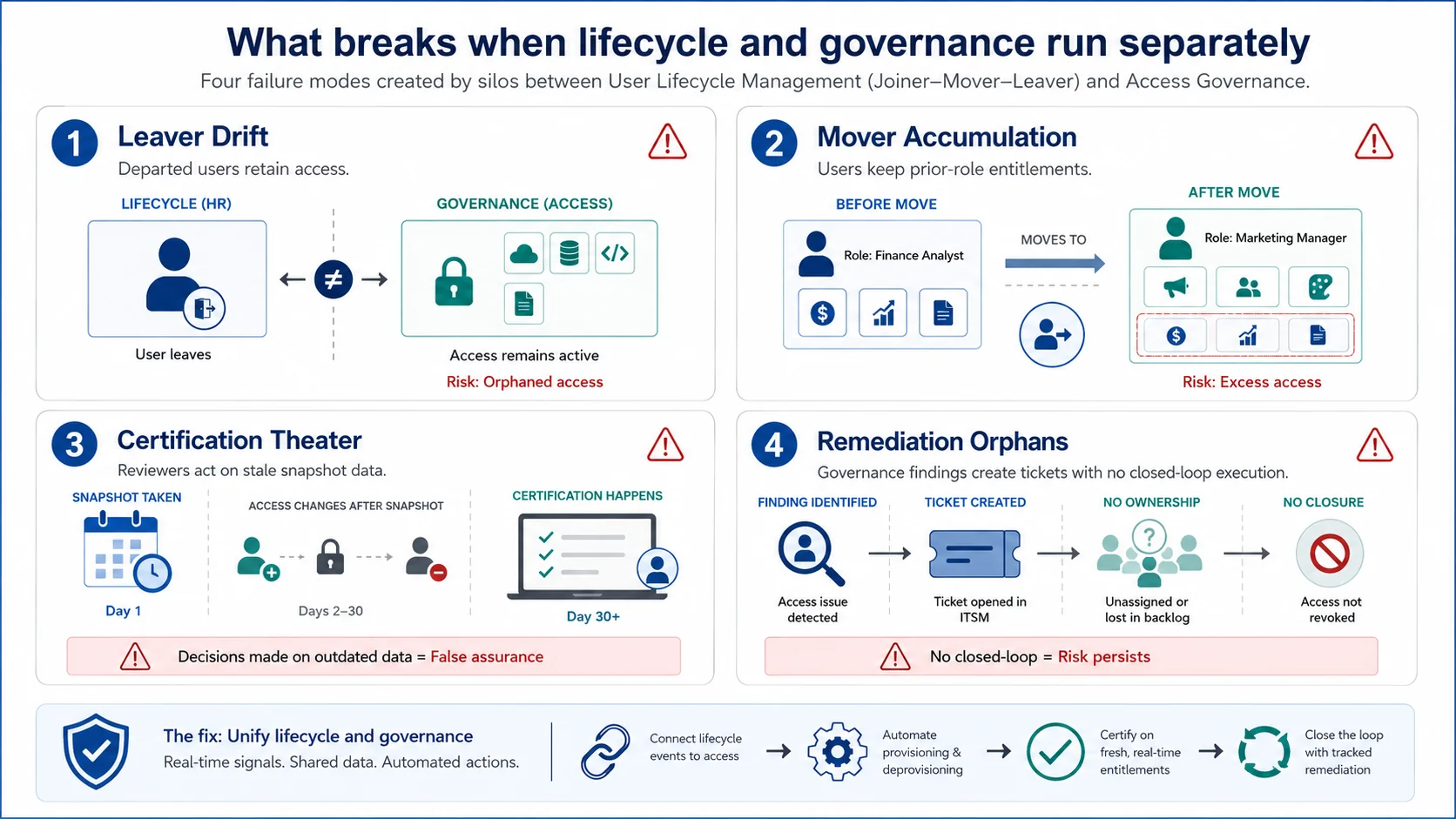 The operational lever. SSPR is where help desk password reset economics move materially — but the 60-80% reduction only lands when configuration discipline is applied across all five elements below.
The five configuration elements
Five configuration elements determine SSPR effectiveness. Missing any produces either compromised security posture or reduced ticket-volume savings. Understanding what each element requires and why is what makes SSPR deployment defensible.
Element 1: Strong authenticator-based verification. Not knowledge-based questions. Modern SSPR uses mobile biometric (Face ID, Touch ID, Windows Hello for Business, Android biometric via out-of-band push to the user's phone), hardware FIDO2 keys, or out-of-band tokens as the reset-authentication factor. NIST 800-63B Rev. 4 explicitly downgraded knowledge-based verification (security questions like "mother's maiden name") because the answers are trivially derivable from public information, prior data breaches, or social engineering. Deployments that use knowledge-based questions fail SOX / PCI-DSS / HIPAA / NIST audit at meaningful scope. The OTP Failure Case Scenarios piece on ICC covers why SMS-OTP is also not appropriate as the reset-authentication factor.
Element 2: Domain workstation pre-login coverage. SSPR portal approaches don't help users who can't log in to their Windows workstation to reach the portal. Domain-joined desktop users who forgot their password can't get to a browser. Pair the SSPR portal with pre-login reset flows (Windows CredentialProvider) that surface the reset workflow at the login screen itself. The Active Directory Login Reset piece covers the pre-login architecture depth.
Element 3: Frontline segment coverage. SSPR that assumes every user has a smartphone with enrolled biometric leaves frontline segments without functional reset — manufacturing floor operators, contact center shared workstations, healthcare bedside clinicians, defense classified environments. Deviceless FIDO2 via Identity Challenge Card covers these segments. Deployments that don't address frontline produce SSPR "success" metrics that mask real workflow gaps for specific workforce populations.
Element 4: Audit-trail integration. Every reset event produces documented identity verification method and audit trail for downstream compliance reporting. SOX §404, PCI-DSS v4.0.1, HIPAA §164.312, and NIST 800-63B Rev. 4 all consume reset-event audit trail as evidence of control operation. Integration with the enterprise IAM audit-log infrastructure and SIEM makes reset events queryable, reportable, and defensible.
Element 5: Rate-limiting and abuse detection. The SSPR flow itself is an attack surface. Attackers with harvested credentials probe SSPR flows for social-engineering signals, weak verification bypasses, and volumetric abuse. Rate-limit per user, per IP, per session; abuse pattern detection; integration with ITDR (ITDR piece) for behavioral threat detection at the reset layer.
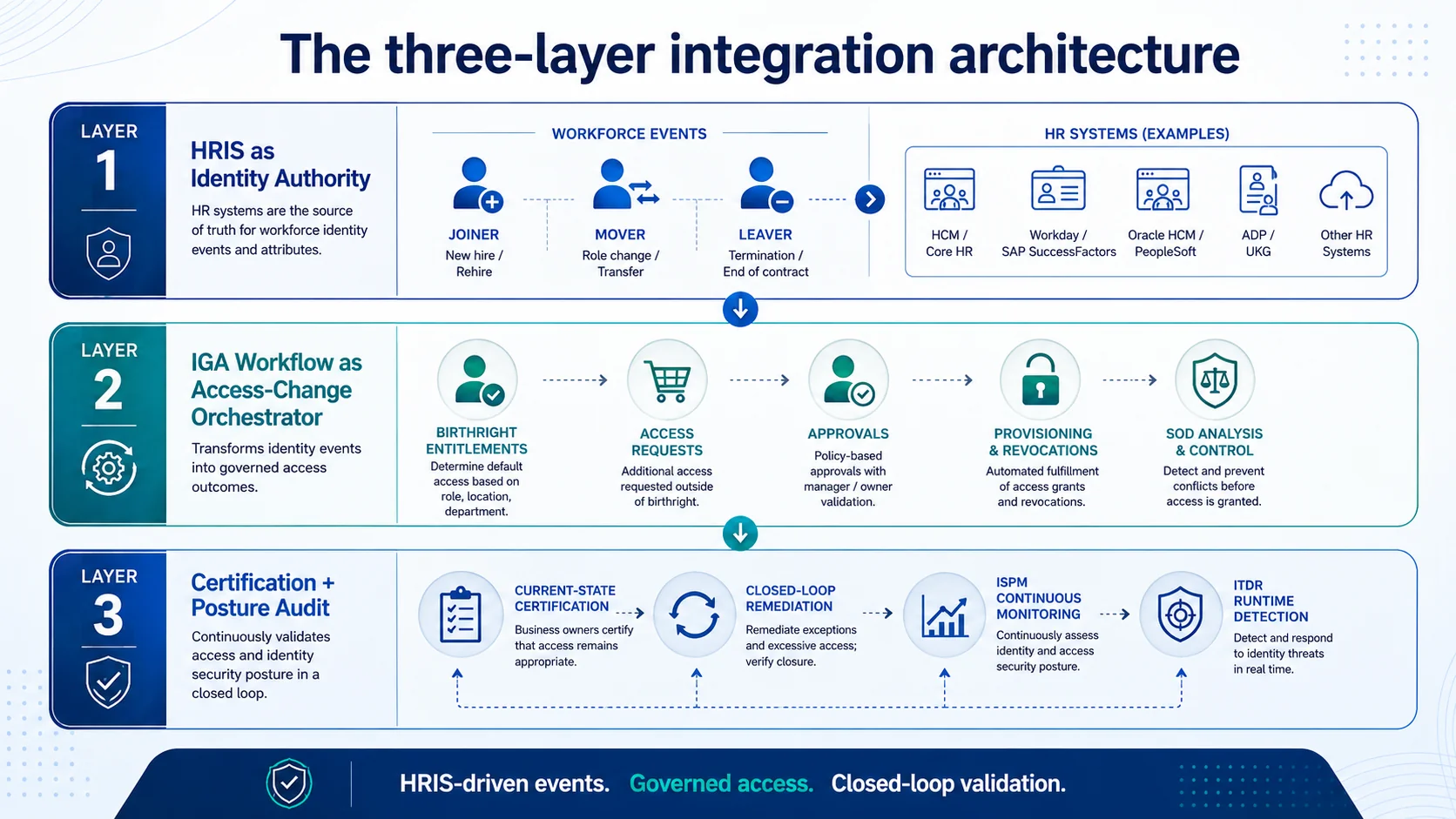 Five elements determine SSPR effectiveness. Poorly-configured SSPR captures partial savings while introducing new security surface — the audit findings that eventually surface cost more than the deployment savings.
The vendor-neutral comparison discipline
Six evaluation criteria produce apples-to-apples SSPR vendor comparison. Enterprises that skip criteria often report vendor-selection surprises within the first 12-18 months of deployment.
Criterion 1: Deployment architecture. Portal-only (SSPR portal alone for logged-in users on other devices) versus portal + pre-login (adds Windows CredentialProvider for domain-joined workstations) versus portal + pre-login + deviceless (adds Identity Challenge Card or equivalent for smartphone-unavailable segments). Each architectural tier covers more workforce segments. Portal-only vendors leave the domain-workstation and frontline cases uncovered.
Criterion 2: Authenticator support. Modern authenticator-based verification is the compliance-defensible path. Evaluate:
- Mobile biometric via out-of-band push
- Hardware FIDO2 keys
- Deviceless FIDO2
- Legacy TOTP as fallback (functional but with the failure modes covered in the OTP Failure Case Scenarios piece on ICC)
- Legacy SMS OTP as fallback only (deprecated for high-assurance under NIST 800-63B Rev. 4)
- Knowledge-based questions (fail compliance — do not use)
Criterion 3: Compliance framework alignment. Evidence generation and audit-response tooling for SOX §404, PCI-DSS v4.0.1, HIPAA §164.312, and NIST 800-63B Rev. 4. Vendors with mature framework-alignment tooling produce faster audit-response cycles. See the Hidden Costs of Identity Management piece for the compliance-mapping cost category.
Criterion 4: Audit trail integration. Reset events flow into the enterprise IAM audit-log infrastructure, integrate with SIEM, produce compliance-ready reports. Standalone SSPR with siloed audit trail produces integration burden downstream.
Criterion 5: Scaling characteristics. Per-user pricing model, connector library depth for target-system integration (Active Directory, Entra ID, LDAP, mainframe, cloud IAM), integration with existing IAM (federation, HRIS-driven lifecycle, PAM), workforce volume handled at typical enterprise scale.
Criterion 6: Composition with the broader IAM layer. SSPR that doesn't compose with HRIS-driven lifecycle (HRIS-Driven Lifecycle piece), PAM (PAM piece), and IGA workflow produces its own governance debt. The mature SSPR is one layer of a coherent IAM platform, not a standalone module.
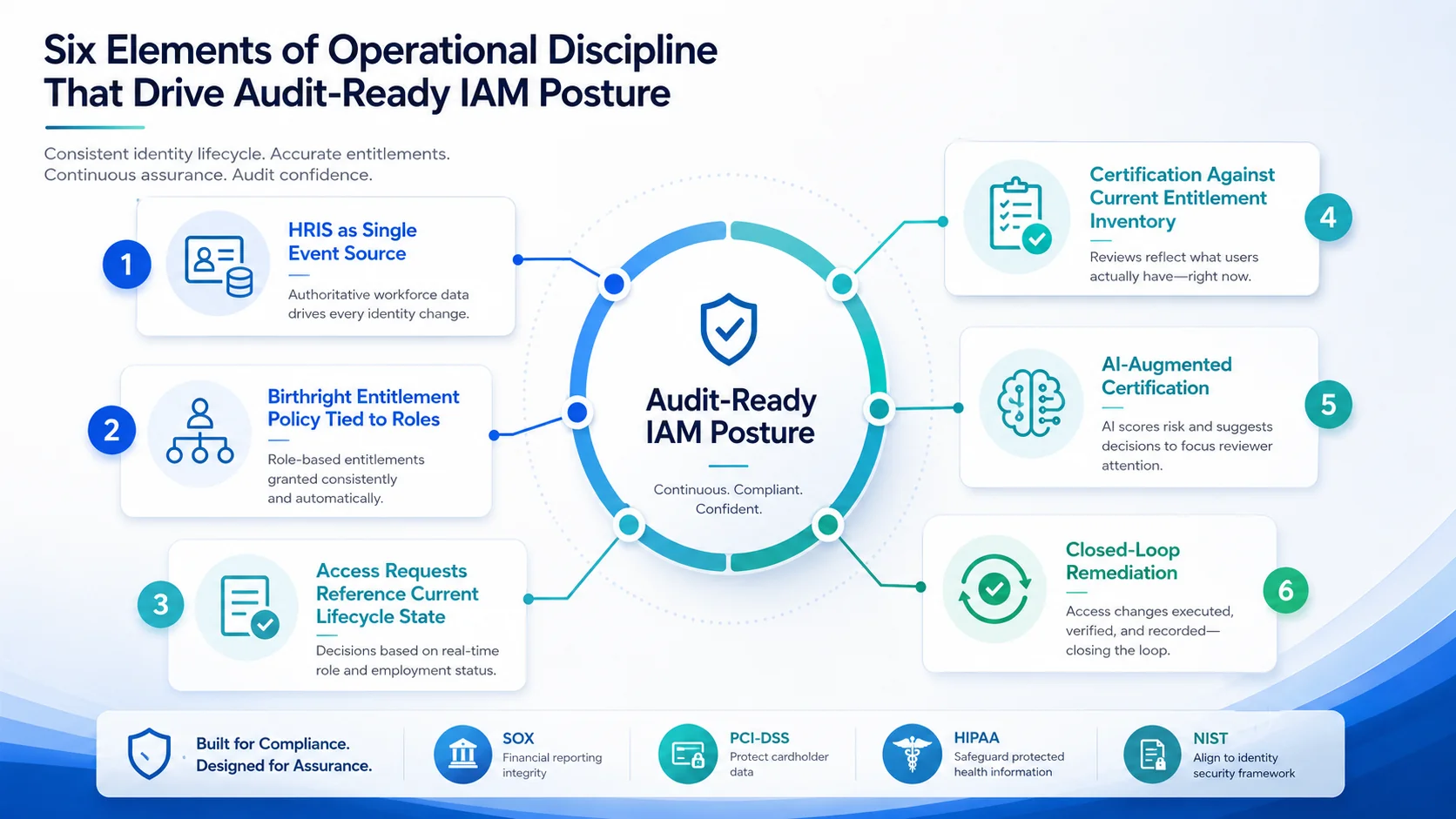 Six evaluation criteria. Apples-to-apples SSPR vendor comparison requires all six. Standalone SSPR that doesn't compose with the broader IAM layer produces integration burden and governance debt downstream.
The compliance surface
Four frameworks produce specific requirements for SSPR in regulated environments. Deployments that use knowledge-based verification fail all four at meaningful scope.
SOX §404. Financial reporting system access reset flows require documented identity verification and audit trail. PCAOB audit findings routinely cite weak SSPR verification in financial-system environments. The SOX Compliance piece covers finance-system access control depth.
PCI-DSS v4.0.1 Requirement 8.3. Card-data environments require strong authentication factors for reset. Knowledge-based verification fails this requirement explicitly. The PCI-DSS v4.0.1 piece covers the specific requirements.
HIPAA §164.312. ePHI-access reset requires documented verification and audit trail. HHS enforcement has cited weak reset flows in breach investigations. The HIPAA §164.312 piece covers healthcare-specific requirements.
NIST 800-63B Rev. 4. The federal standard downgraded knowledge-based verification and requires strong authenticator-based verification at AAL2 and above. Federal-adjacent and defense-industry deployments must align with the standard.
The passwordless direction
The 2026 direction eliminates the SSPR problem structurally through passwordless workforce authentication. This is a longer-horizon shift but where mature enterprise IAM programs are moving.
Platform passkeys + biometric on managed devices. iCloud Keychain for Apple ecosystems, Google Password Manager for Android/Chrome, Microsoft Entra ID for Windows-centric environments. Reset volume for platform-passkey users approaches zero because device loss doesn't produce lockout — the passkey follows the user across the device fleet.
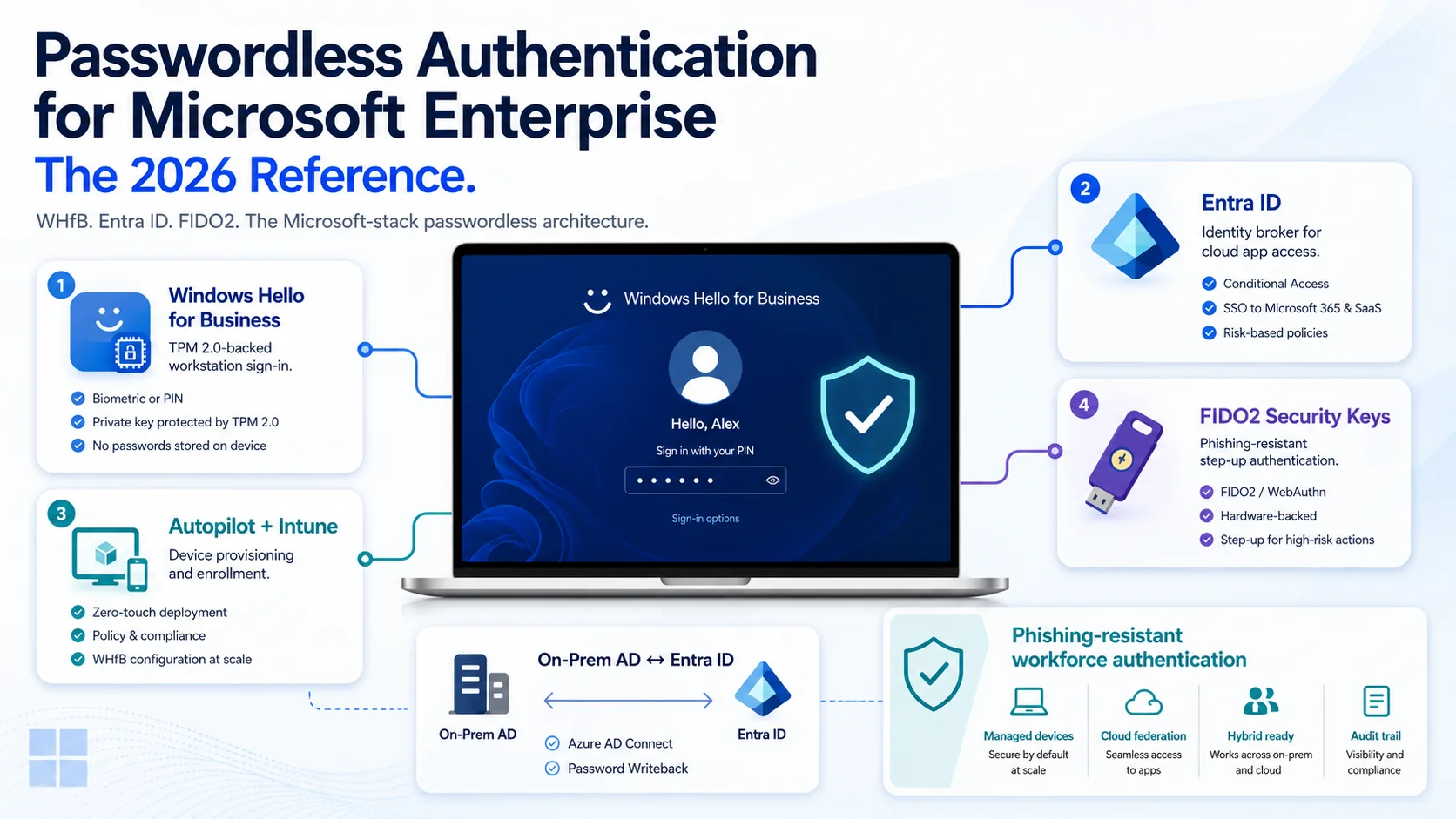
Windows Hello for Business on Windows workstations. WHfB as the primary Windows authentication factor replaces password-based Windows login. TPM 2.0-backed authentication produces AAL2-equivalent assurance without password reset volume.
Hardware FIDO2 keys for step-up. Privileged operations use hardware FIDO2 authentication on top of the passwordless baseline. Hardware key loss produces a documented replacement workflow rather than a password reset event.
Deviceless FIDO2 via Identity Challenge Card. Smartphone-unavailable segments authenticate via the card without password dependency. Card loss produces a documented replacement workflow rather than a password reset event.
As passwordless coverage expands, SSPR remains as fallback for the residual password-dependent systems (legacy applications, migration-transition state, specific compliance cases) but the workforce-scale volume shrinks meaningfully. The Passkey Deployment Playbook piece on ICC covers the enterprise passwordless migration path.
The 2026 reference path
Deploy SSPR with all five configuration elements. Strong authenticator-based verification (not knowledge-based questions). Domain workstation pre-login coverage. Frontline segment coverage. Audit-trail integration. Rate-limiting and abuse detection.
Apply the six-criterion vendor comparison discipline. Deployment architecture. Authenticator support. Compliance framework alignment. Audit trail integration. Scaling characteristics. Composition with broader IAM layer.
Align with the compliance surface. SOX §404 audit trail and verification. PCI-DSS v4.0.1 Requirement 8.3 strong authentication. HIPAA §164.312 documented verification. NIST 800-63B Rev. 4 authenticator-based verification at AAL2.
Compose SSPR with pre-login reset for domain-joined workstations (Active Directory Login Reset piece) and deviceless authentication for frontline segments (Identity Challenge Card). The three architectures together cover ~90% of forgotten-password volume; help desk assisted reset handles the residual.
Progress toward passwordless. Platform passkeys + biometric, Windows Hello for Business, hardware FIDO2 step-up, deviceless FIDO2 for frontline. Reset volume drops structurally as passwordless coverage expands.
Point auditors at the Trust Center for Avatier's own posture. The Avatier Trust Center with the SecurityScorecard grade view — SOC 2 Type II with zero exceptions, ISO/IEC 27001:2022, PCI DSS v4.0.1, CSA STAR Level 1, NIST 800-53 Rev. 5 aligned, CISA Secure-by-Design Pledge signatory.
ABOUT THE AUTHOR

More from Pillar 4: Login Reset
Active Directory Login Reset for Domain-Joined Environments: The 2026 Reference
Active Directory login reset for domain-joined Windows workstations is the specific reset architecture where users can't reach a self-service portal because they can't log in at all. The 2026 enterprise reference on the pre-login reset architecture, the Windows CredentialProvider integration, the on-premises AD versus Entra ID hybrid patterns, the compliance requirements that shape domain reset workflow, and the deployment discipline that keeps AD reset defensible under SOX and PCI-DSS audit.
Password Reset: The 2026 Comprehensive Enterprise Guide
Enterprise password reset is one of the largest hidden cost centers in enterprise IT — help desk labor at $70 per reset ticket, workforce productivity losses at 15-30 minutes per user per incident, and the security surface every recovery flow creates. The 2026 comprehensive reference on the reset cost economics, the four workflow architectures, the compliance implications, the self-service reset (SSPR) discipline that reduces ticket volume 60-80%, and the passwordless migration path that eliminates the reset problem structurally.
Password Help Desk Cost Analysis: The 2026 $480-Per-Employee Reference
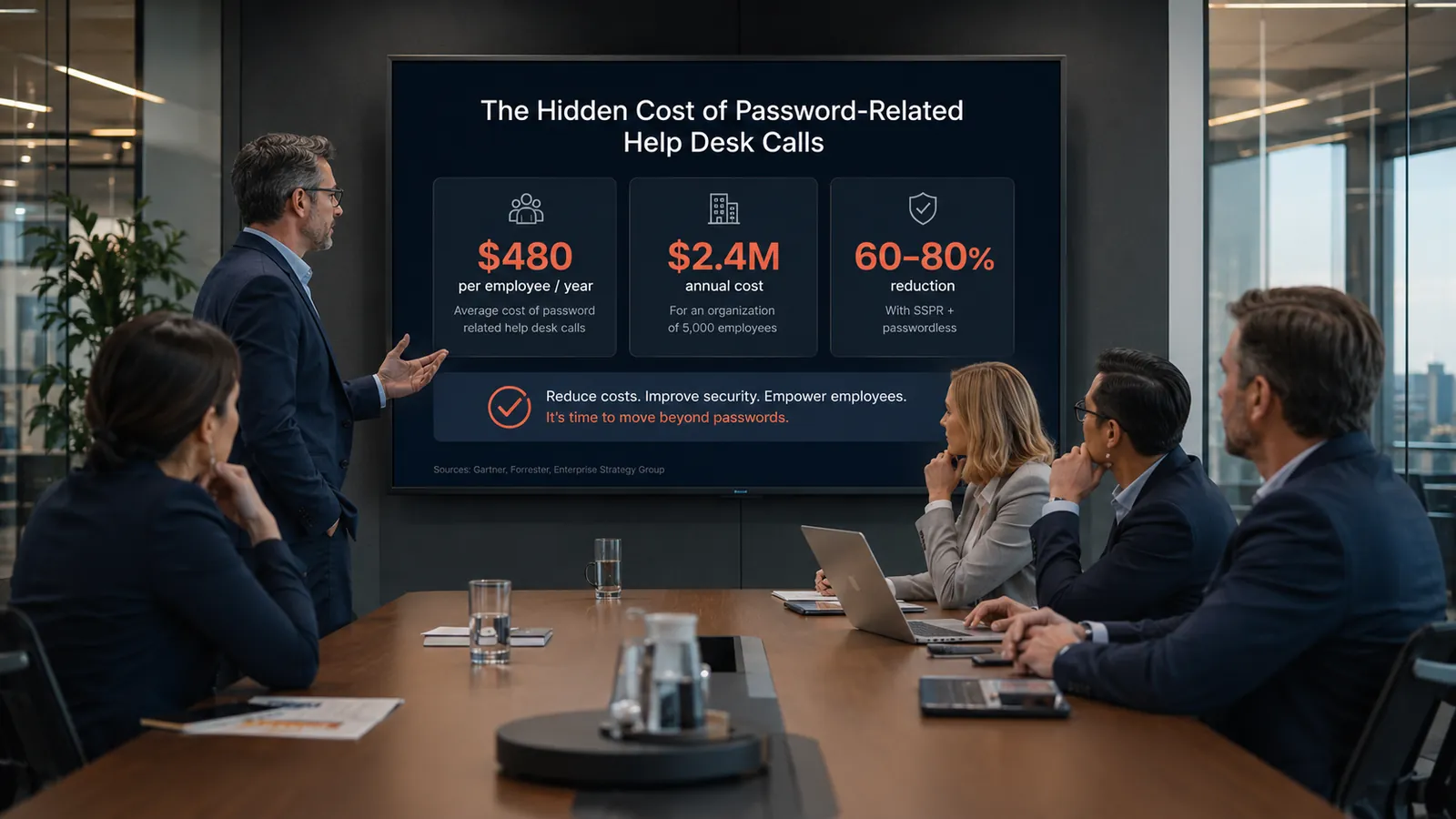
Password-related help desk calls cost the average enterprise $480 per employee per year — a hidden line item that dominates IT operational cost at scale and produces $2.4M in annual burn for a 5,000-employee enterprise. The 2026 enterprise reference on the specific cost components, the volume drivers that scale the number by industry, the SSPR and passwordless architectural interventions that reduce it 60-80%, and the CFO-defensible ROI model that justifies the reduction investment.