IAM Vendors in 2026: How the Market Breaks Down
A category-level guide to how the IAM vendor market segments into suites, point solutions, and platform plays, plus the criteria and red flags that separate real capability from marketing claims.
Vendor comparisons, decision frameworks, and evaluation checklists for enterprise credential governance.
Showing 12

A category-level guide to how the IAM vendor market segments into suites, point solutions, and platform plays, plus the criteria and red flags that separate real capability from marketing claims.

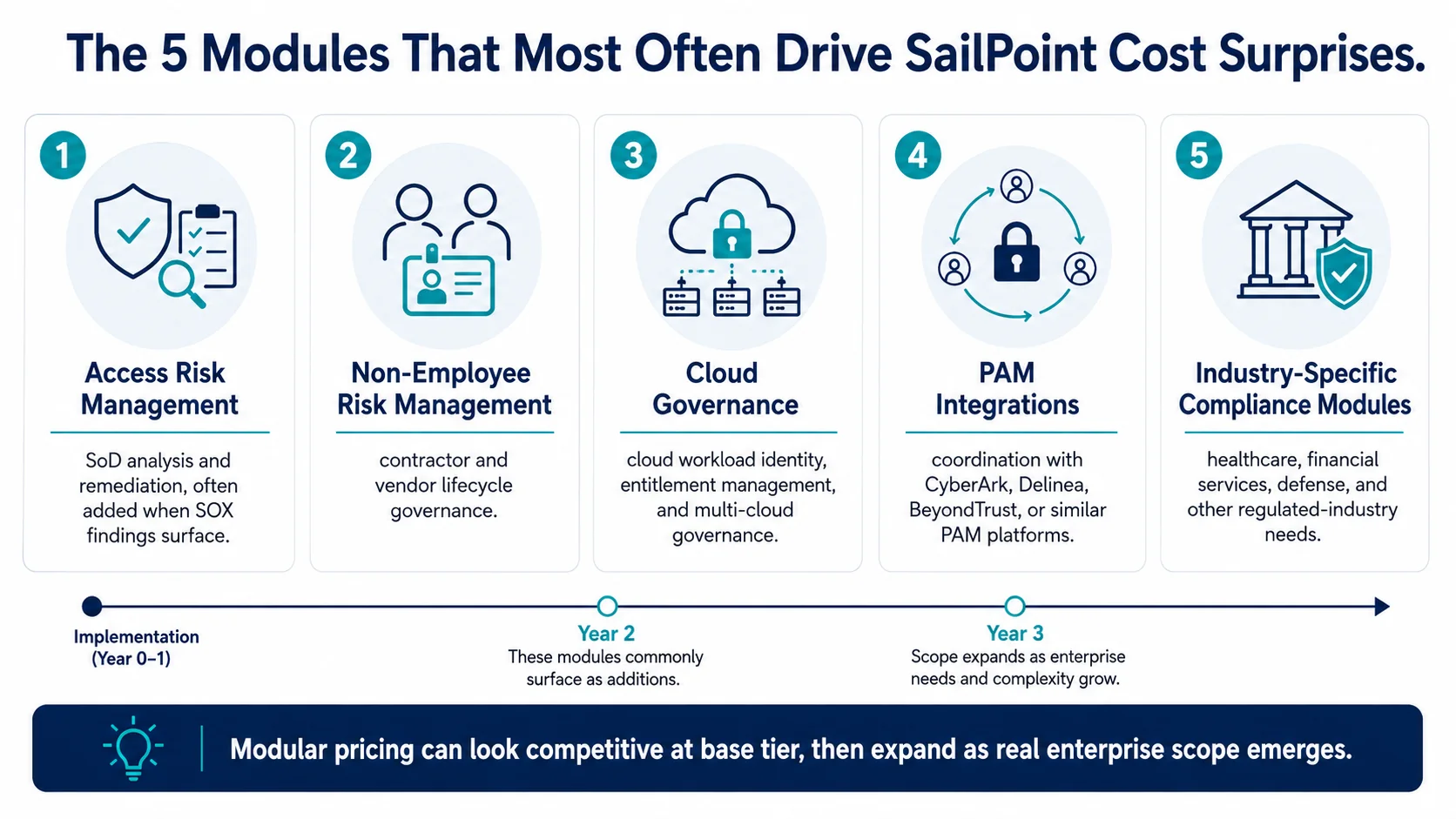
Enterprise IAM buyers evaluating SailPoint against Avatier are comparing two fundamentally different pricing philosophies — modular per-capability pricing with premium tiers and per-connector charges versus all-inclusive licensing that bundles the same capability set into the base license. The 2026 enterprise reference on the structural pricing differences, the modules that drive most of the SailPoint cost surprises, the Avatier all-inclusive positioning, and the buyer-side comparison discipline that produces defensible vendor selection instead of feature-checklist theater.

Enterprise password reset licensing has three fundamentally different pricing models — per-user subscription, per-reset-event consumption, and modular capability-based licensing — and the fit between model and buyer profile determines whether TCO tracks the vendor's list-price projection or surprises 18-24 months into deployment. The 2026 enterprise reference on the three licensing models, the specific line items that drive cost variance, and the buyer discipline that produces defensible reset-workflow vendor selection.

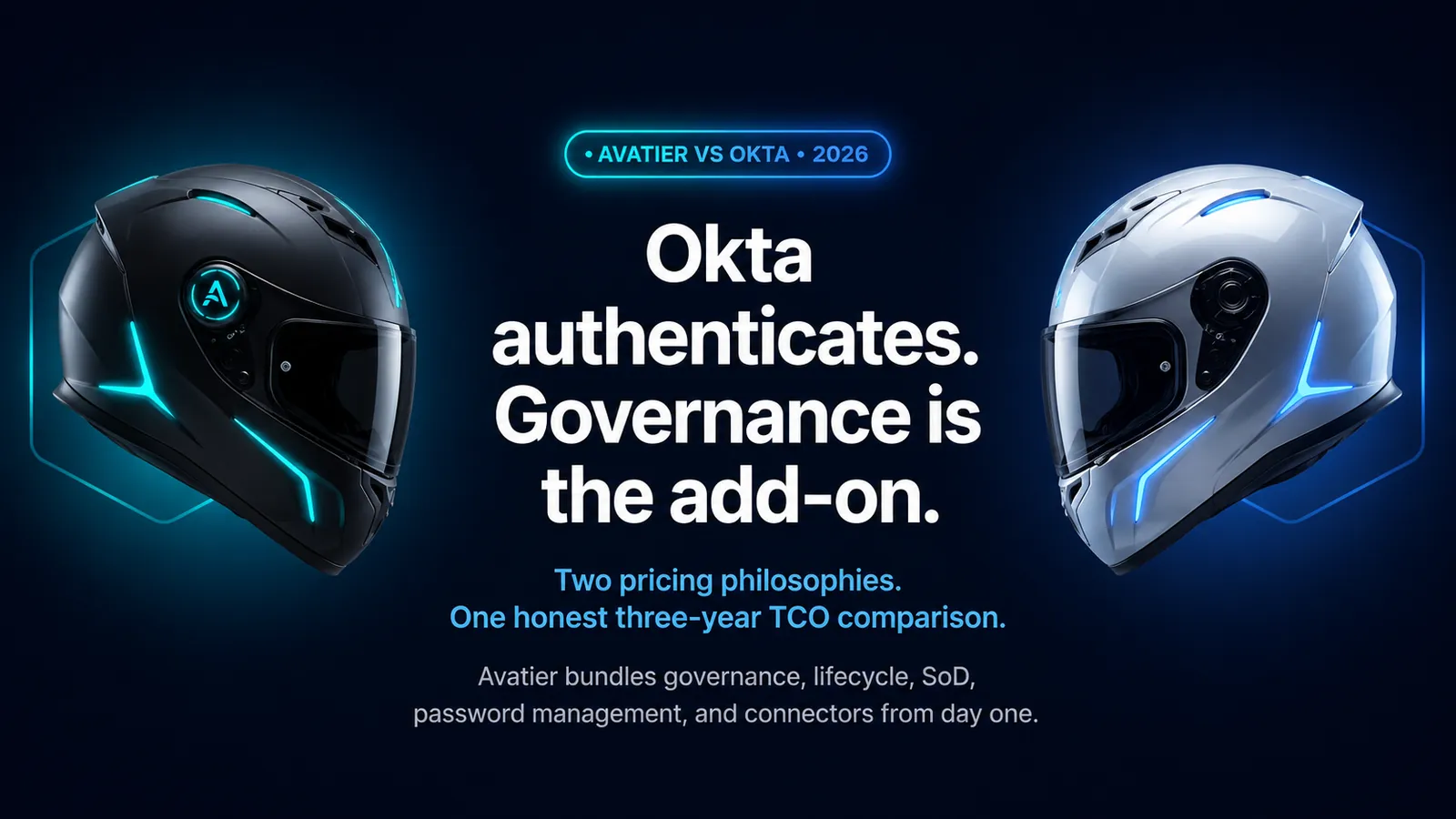
Enterprise IAM buyers evaluating Avatier against Okta are comparing two fundamentally different pricing philosophies — all-inclusive licensing that bundles IGA workforce lifecycle and identity governance into base pricing versus a workforce IdP with tiered pricing where governance capability is priced as premium modules above the federation baseline. The 2026 enterprise reference on the structural pricing differences, the specific modules that produce Okta cost variance at scale, and the buyer discipline for defensible vendor selection.

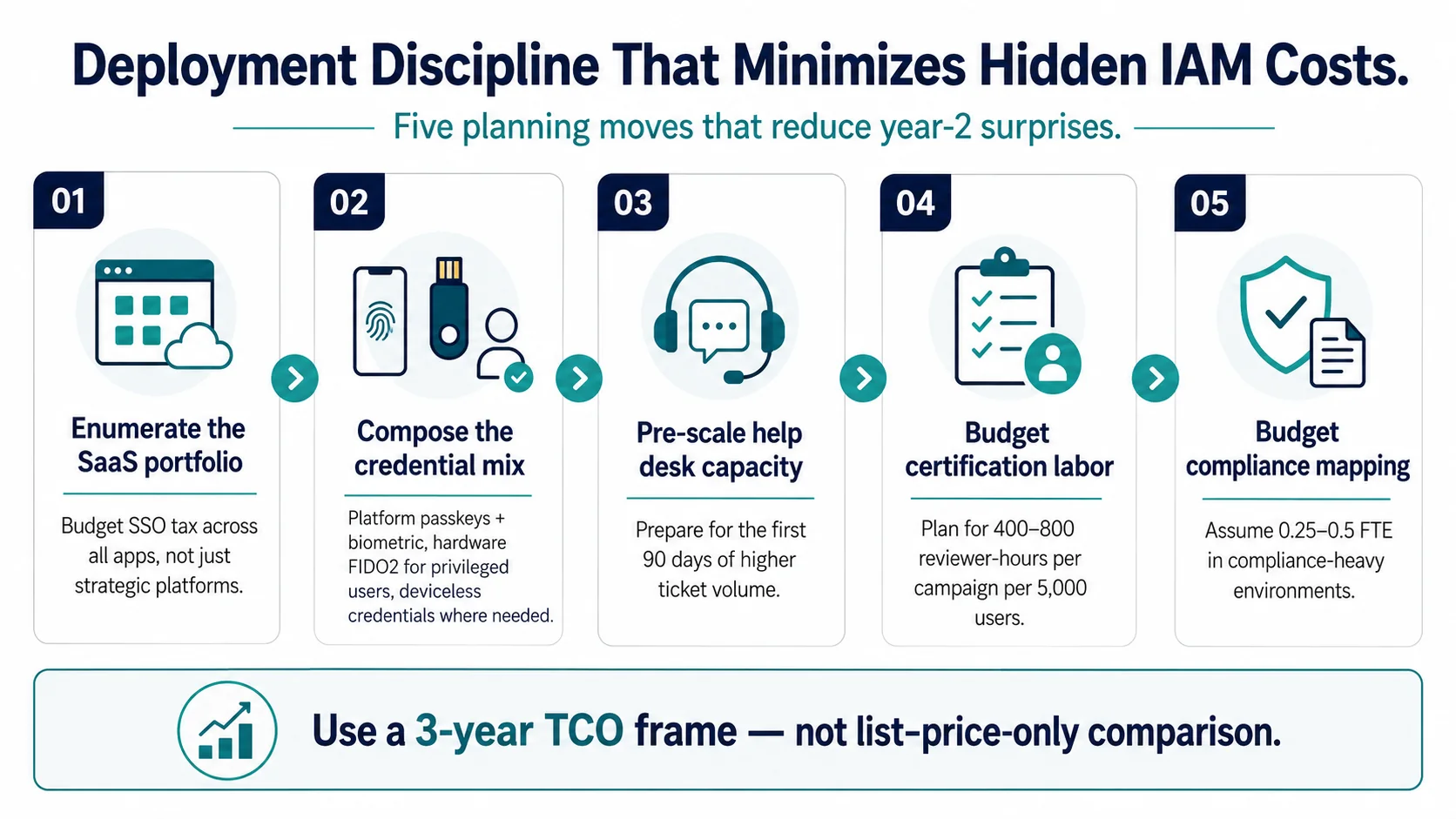
Enterprise IAM has five hidden cost categories that auditors surface and buyers systematically undercount — the SSO integration tax per SaaS application, MFA credential distribution and refresh, help desk rollout volume, certification-campaign labor, and the ongoing compliance-mapping work that keeps audit-ready posture defensible. The 2026 enterprise reference on what each hidden cost actually costs at scale, why they surface only in year 2, and the deployment discipline that minimizes them.

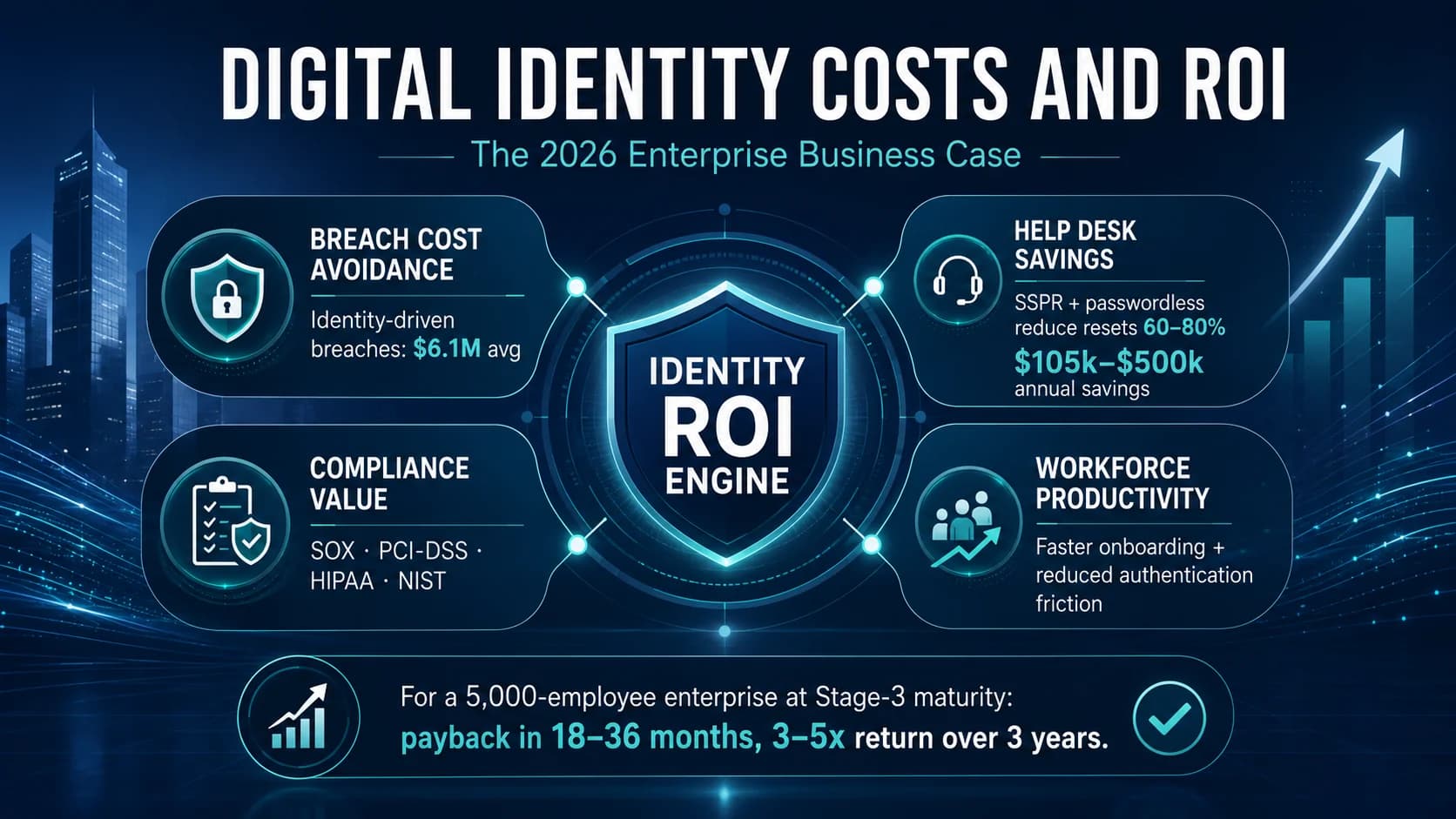
Enterprise IAM investment isn't a cost center — it's a four-category ROI generator that returns breach cost avoidance, help desk savings, compliance value, and workforce productivity gains. The 2026 enterprise reference on what each ROI category actually returns at scale, the maturity-ladder curve that shows where returns compound, the common ROI framing mistakes that make IAM look worse on paper than in reality, and the business case that produces defensible funding for enterprise identity programs.

Enterprise IAM total cost of ownership isn't a per-user list price — it's a five-driver model where infrastructure, implementation, ongoing operations, integrations, and the hidden compliance surface compose into the actual multi-year spend. The 2026 enterprise reference on what drives IAM cost, how to compare vendor pricing models honestly, the hidden costs auditors surface, and the three-year TCO calculation frame that separates real cost comparison from list-price theater.

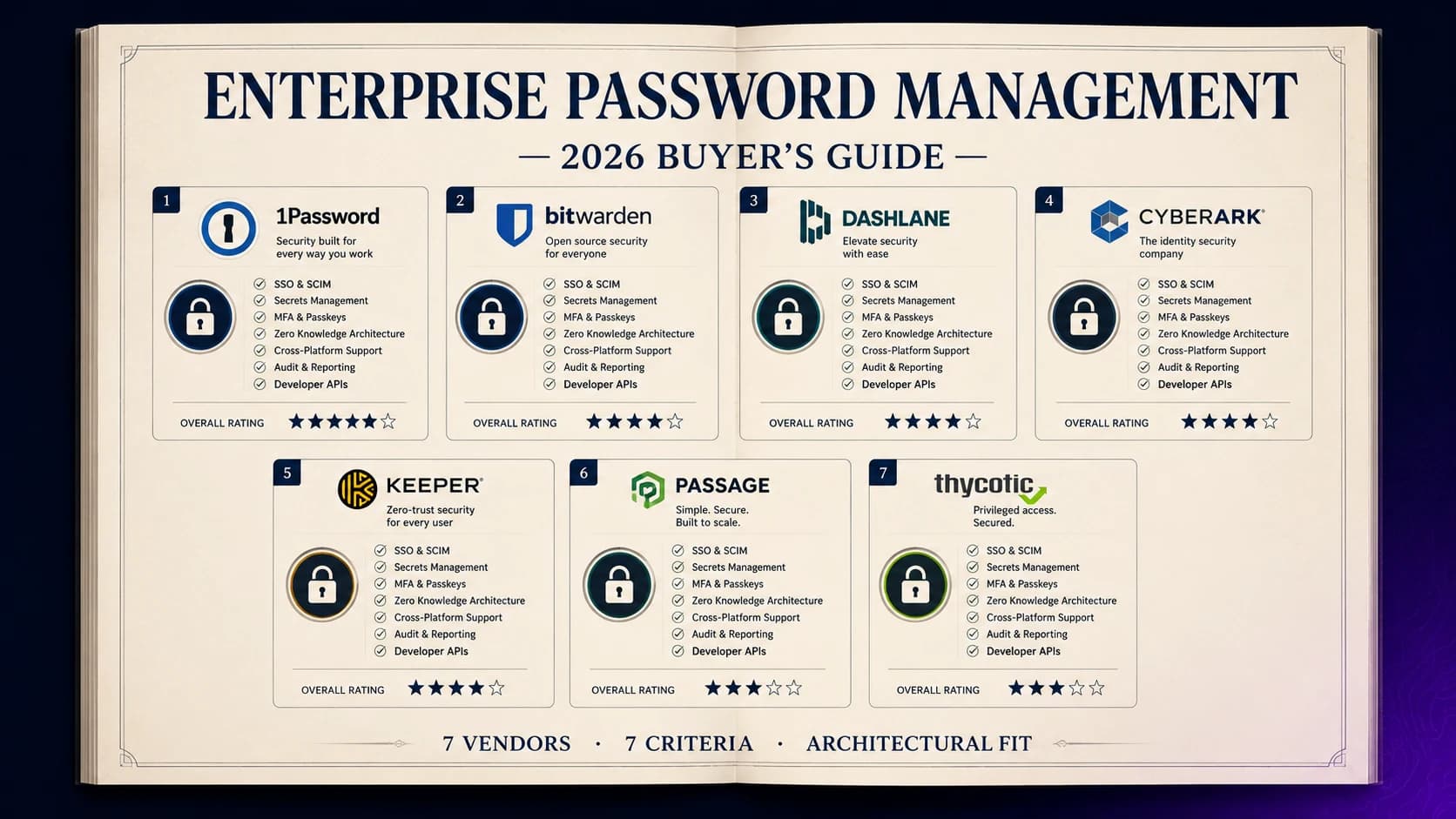
Enterprise password management software handles the password reality enterprises can't yet escape — legacy applications, frontline workers, contractor populations, and the long tail of systems that won't go passwordless this decade. The 2026 buyer's guide compares the major vendors, the evaluation criteria that actually matter, and the architectural fit decisions for different workforce profiles.

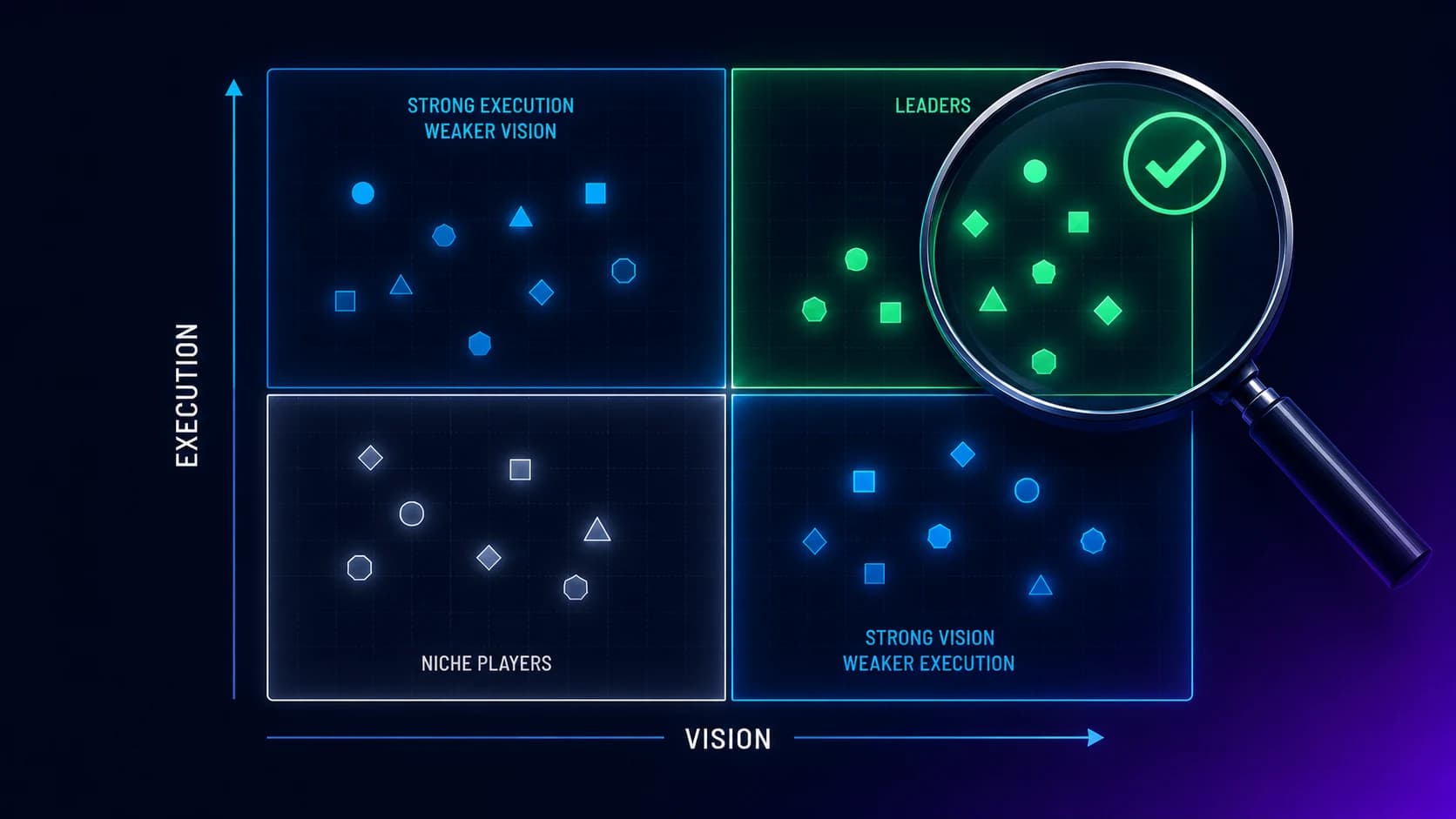
Analyst quadrant reports are the most-cited and most-misread artifact in enterprise IGA procurement. The 2026 buyer-side guide on how vendor quadrant placement actually maps to deployment risk, where the methodology blind spots are, and how to use the report alongside the operational evidence procurement teams actually need.

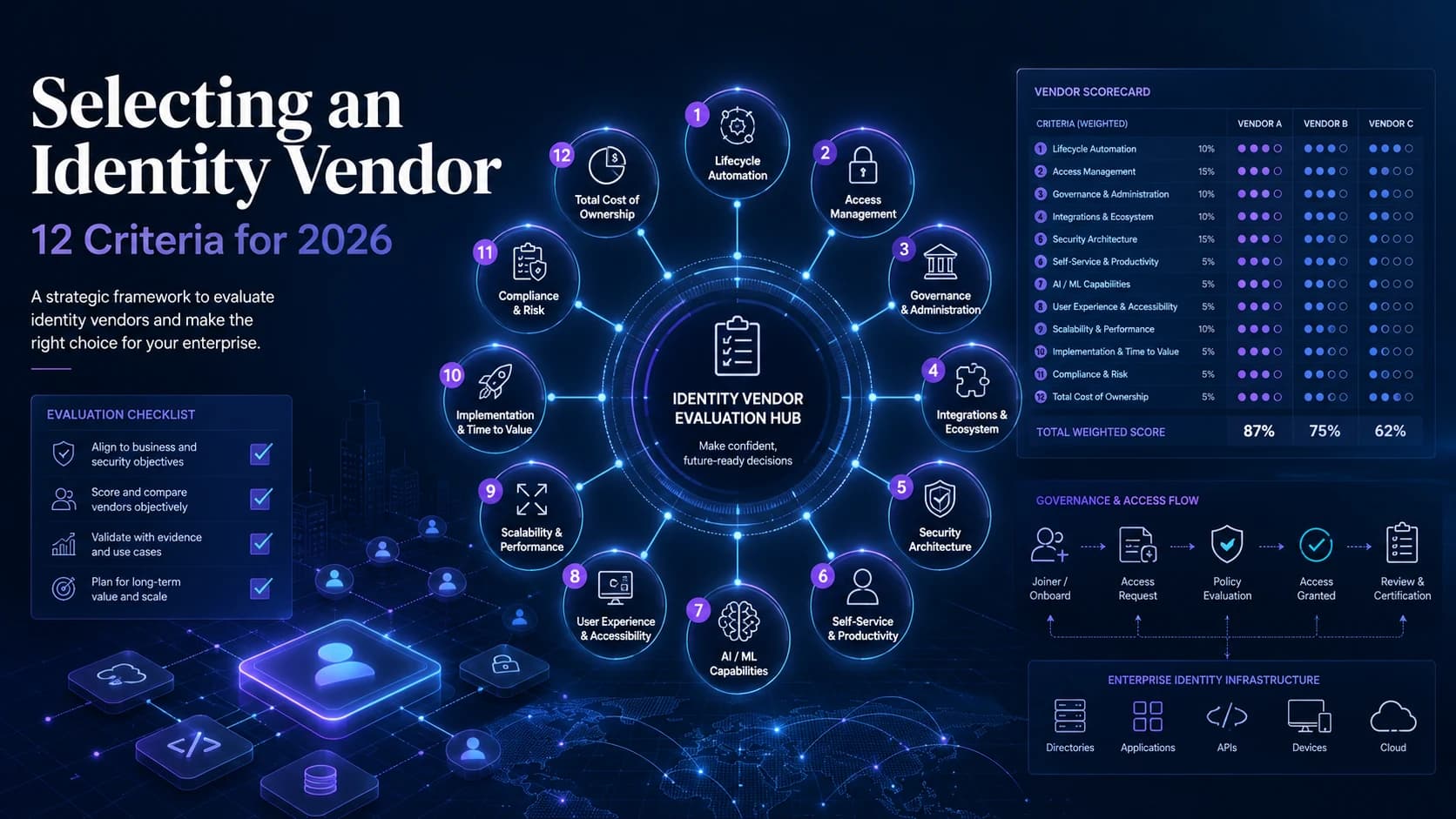
The evaluation framework for choosing an identity management vendor — what 2026 looks like for each criterion, what to ask in demos, and what trade-offs the vendor probably won't surface.

Twelve identity lifecycle management platforms compared against the operational reality of running joiner/mover/leaver at workforce scale — including mainframe, service-desk verification, and NIST 800-53 alignment.

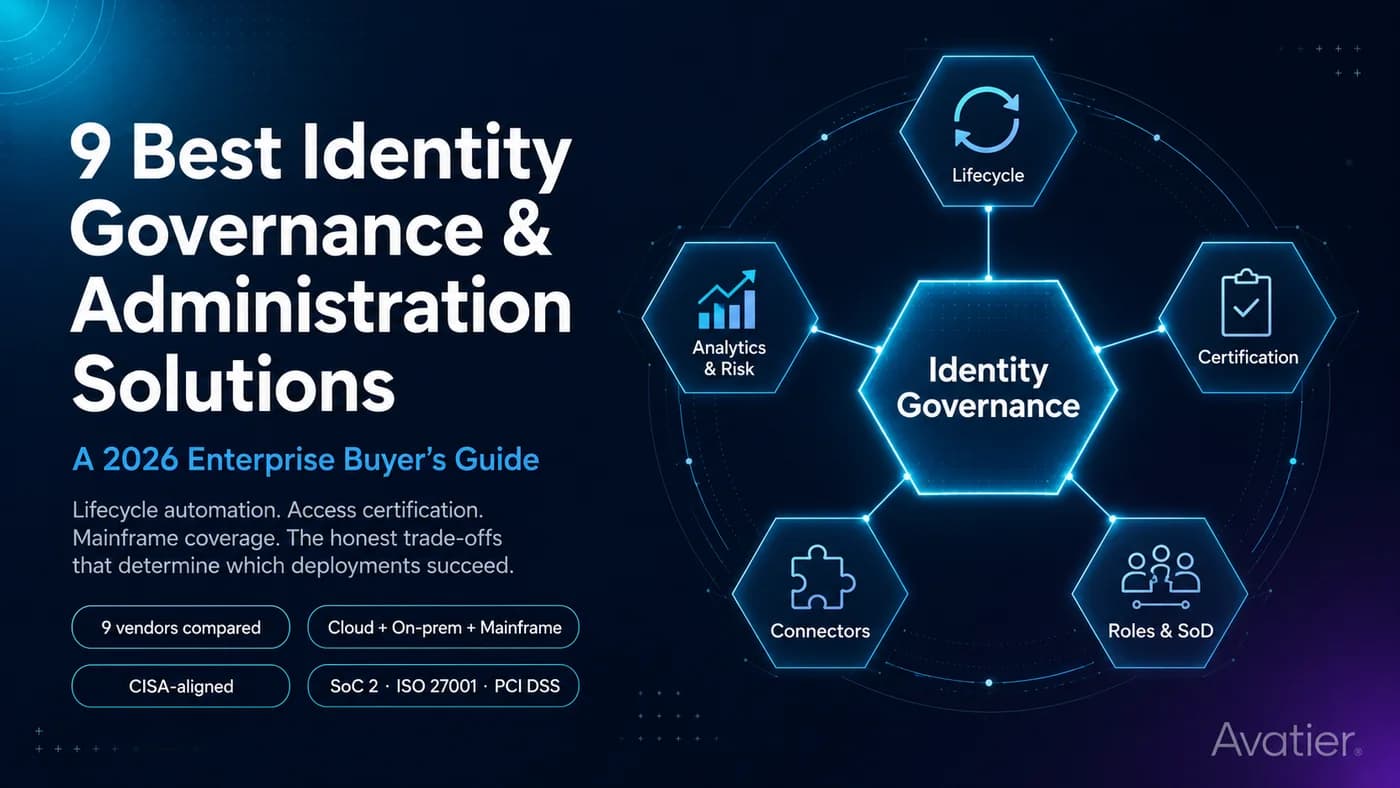
A 2026 buyer's guide to enterprise identity governance and administration — nine vendors compared on lifecycle automation, access certification, mainframe coverage, and the honest trade-offs that determine which deployments succeed.
Savings Calculator
Enter your company size and see how much your help desk spends on password resets — and how much Avatier Credential Governance saves.
Avatier Credential Governance reduces your cost by
Over 1 year